
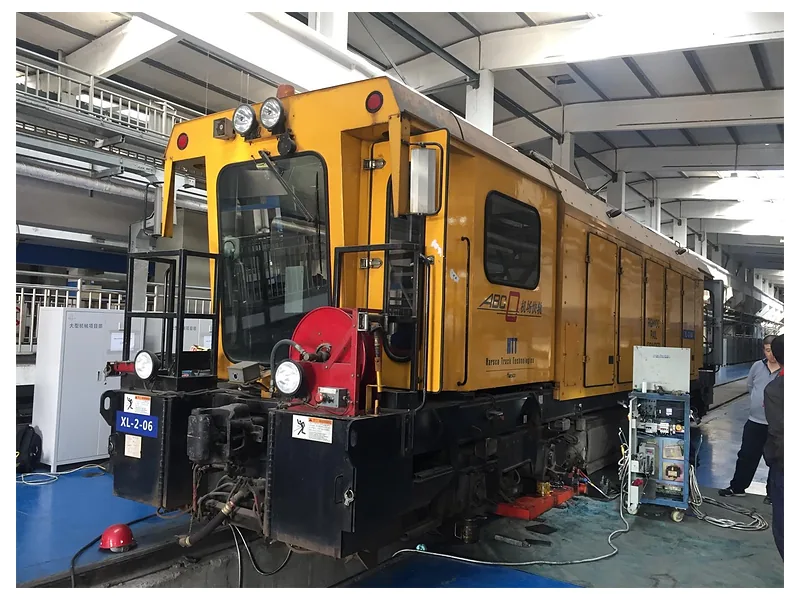
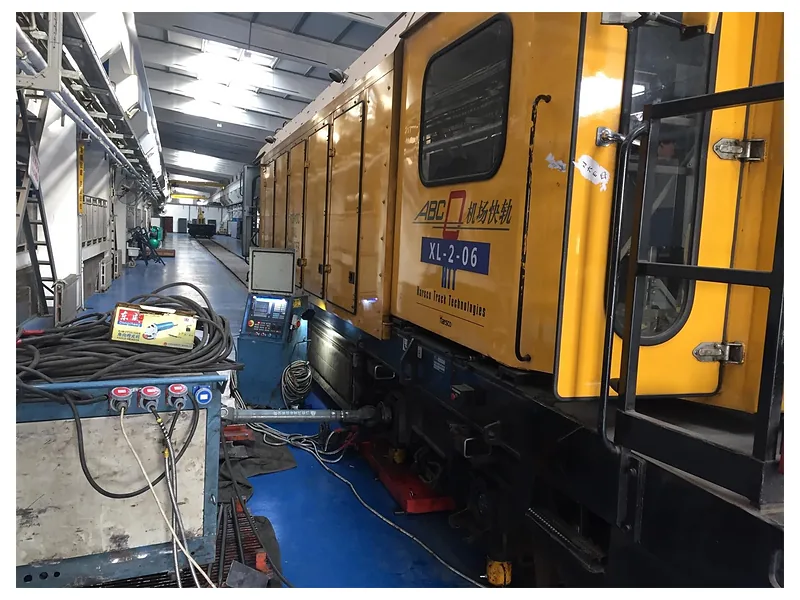
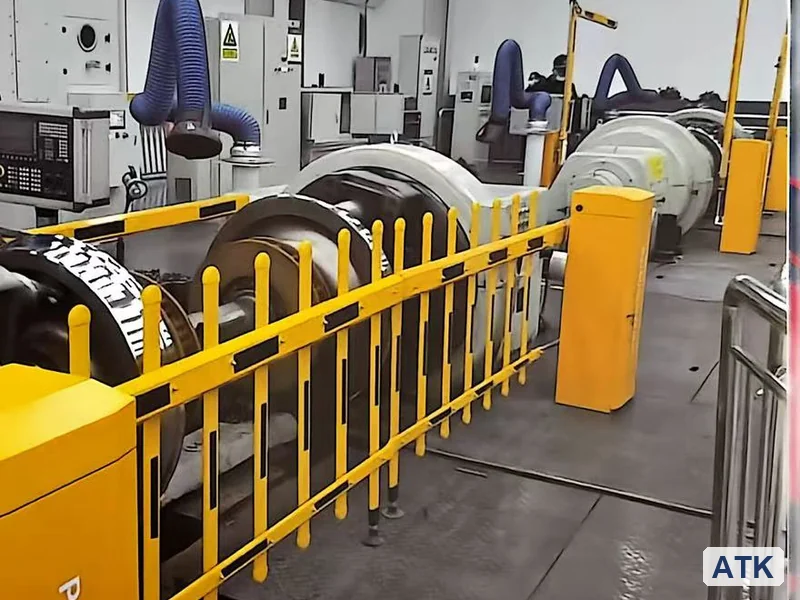
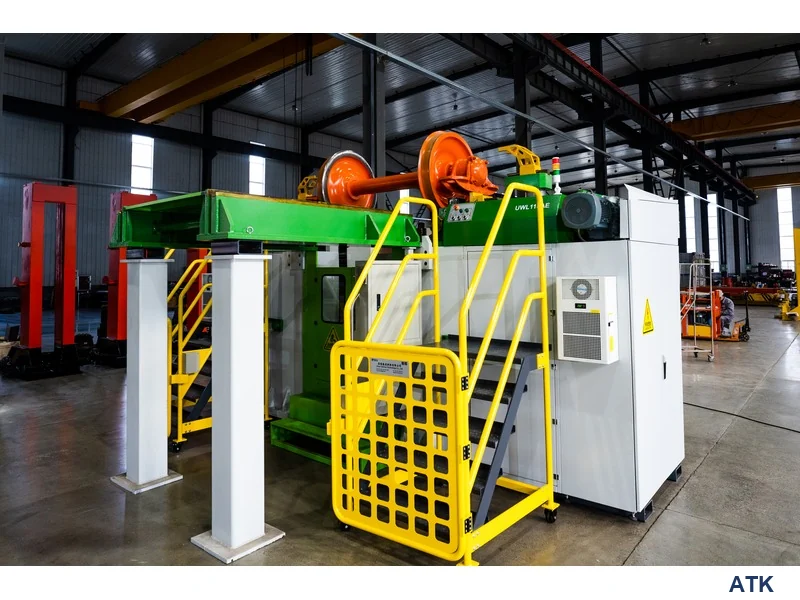
The CY8013D is a mobile CNC underfloor wheel lathe for reprofiling railway wheel treads and flanges while the wheelset remains mounted on the vehicle.Where bearing units on the wheelset need attention, ATK supplies railway axlebox bearings and wheelset bearing units. Instead of lifting the wheelset out of the bogie and transporting it to a workshop lathe, the machine is brought to the vehicle, positioned beneath the wheel and cuts the profile in place. It is built for locomotive depots, metro and EMU sheds, light rail workshops, industrial railways and field maintenance where a fixed underfloor wheel lathe is unavailable or uneconomical
An underfloor wheel lathe is a CNC machine tool that restores worn wheel treads and flanges by removing a controlled amount of metal. The conventional version is installed permanently in a pit under a depot track. A mobile underfloor wheel lathe - also called a portable CNC wheel lathe, a mobile wheelset reprofiling system or an on-site wheel turning machine - performs the same wheel truing operation without that permanent installation. The machine is transportable, needs no dedicated pit or foundation, and can be set up in an existing maintenance trench or, with a field work platform, on ordinary track.
"Underfloor" describes the working position beneath the vehicle, not a civil structure. Because the wheelset is not removed, disassembly, heavy lifting and wheelset transport are eliminated, along with the quality and safety risks that come with dismantling a bogie. For operators running tight timetables, in-situ wheelset reprofiling turns an emergency workshop job into a planned maintenance task that fits inside a normal overnight stabling window.Where a mobile lathe sits against welding and rail grinding in a depot equipment set is covered in track maintenance equipment.
l No wheelset removal. Tread and flange are machined with the wheelset still installed under the vehicle.
l Mobile and relocatable. No permanent installation; operates in a maintenance pit, or on ordinary track with a field work platform and auxiliary equipment for rescue work.
l Axle load 10-40 t. Covers light rail vehicles and small industrial locomotives as well as heavy mainline locomotives.
l All drive types. Suitable for AC drive, DC drive, hydrostatic drive and non-powered wheelsets; external drive units are used where the vehicle cannot rotate the wheelset itself.
l Siemens CNC platform. Full NC profiling with servo motors and drives for stable, repeatable wheel profile machining.
l Programmable wheel profiles. JM, LM and TB contours to TB/T 449-2003, plus custom international wheel profiles programmed into the CNC system.
l Modular assemblies. Control and drive cabinets are separate units that can be replaced individually for fast service.
l Flexible installation. The machine can stay mobile or be fixed in position to reduce manual handling and increase throughput.
Parameter | Specification |
Model | CY8013D mobile CNC underfloor wheel lathe |
Machining wheel diameter | 800-1300 mm |
Max. wheel machining width | 150 mm |
Wheel speed | 6-36 rpm, stepless |
Full tread machining time | 10-15 min per cycle |
Machining accuracy | < 0.5 mm |
Radial runout after machining | < 0.5 mm |
Tread roughness after machining | ≤ Ra 12.7 µm |
Max. depth of cut | 2.0 mm |
Feed rate | 5-25 mm/min |
Tool post rapid traverse | 2 m/min |
Control system power | 6.0 kW, single-phase 220 V / 110 V, 50/60 Hz |
Main drive power | 30 kW, three-phase 380 V / 480 V, 50/60 Hz |
Overall dimensions (L x W x H) | 1360 x 780 x 430 mm |
Machine weight | approx. 3000 kg |
CNC system | Siemens CNC with servo motors and drives |
Applicable axle load | 10-40 t |
Wheel profile library | JM / LM / TB to TB/T 449-2003, plus programmable custom profiles |
All values are taken from the manufacturer's technical specification. Confirm the final configuration, power supply and wheel profile library in the technical agreement before placing an order.
The CY8013D is used on diesel and electric locomotives, EMUs and passenger coaches, metro and light rail vehicles, wagons, engineering and maintenance vehicles, and small industrial and mining locomotives. Typical working sites include locomotive depots, metro stabling yards, rolling stock workshops, mining and plant railways, and trackside locations where a wheel defect has to be corrected before the vehicle can return to service. It is also used for rescue operations when a damaged wheel cannot be moved to a fixed wheel lathe.
Criteria | Mobile underfloor wheel lathe | Fixed underfloor wheel lathe |
Pit and civil works | No dedicated pit or foundation required | Requires a pit, workshop and installation |
Investment | Lower equipment and installation cost | Higher equipment and building cost |
Axle load range | 10-40 t, including light rail vehicles | Typically designed for heavier axle loads |
Max. depth of cut | 2.0 mm | Higher |
Throughput | Approximately half of a fixed installation | Higher, suited to high-volume depots |
Portability | Relocatable between sites and vehicles | Permanently installed |
Machining accuracy | Meets the 0.5 mm wheel machining requirement | Comparable, with faster cycles |
The trade-off is straightforward: a mobile wheelset reprofiling system wins on flexibility, civil cost and applicability to light axle loads, while a fixed underfloor wheel lathe wins on cycle time and depth of cut. A smaller depot or a mixed fleet often gains more from one mobile machine that can serve several sites than from a single fixed installation.For a fuller comparison of where each type fits, see mobile vs fixed underfloor wheel lathe — it works from the fleet and the building rather than the specification.
1. Position the machine. Select the left or right tool holder, level the bed and move the machine under the wheel to be machined; fit the axial control wheel carrier against the inner side of the wheelset.
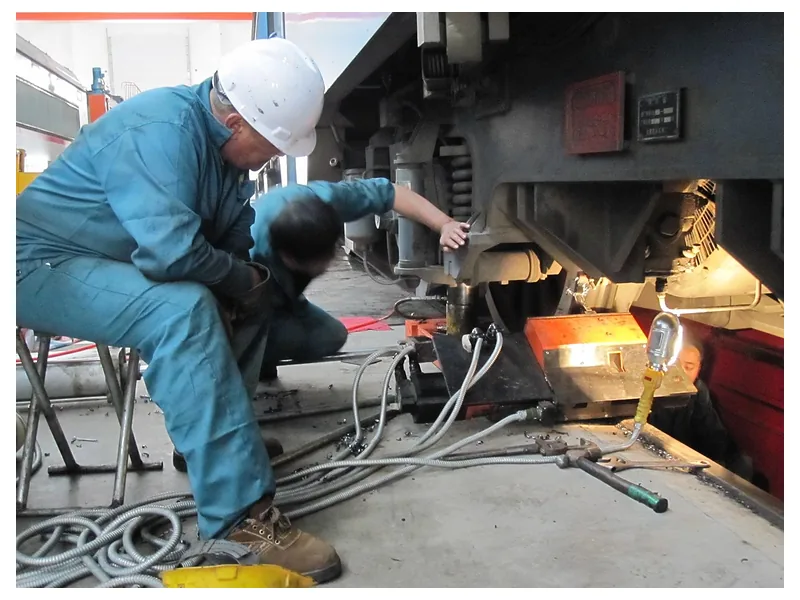
2. Secure and lift the wheelset. Lift the axle box with the supplied cylinders so the wheel runs clear of the rail, and apply anti-slip measures to the vehicle.
3. Set the wheel drive. Rotate the wheelset at 6-36 rpm using the vehicle drive or the external AC / DC / hydrostatic drive unit.
4. Set datums and cut. Touch off the X and Y axes, enter the total depth of feed, then run CNC profiling; the tool post returns automatically at the end of the cycle.
5. Inspect the result. Check the restored tread and flange profile, radial runout and surface finish before returning the vehicle to service.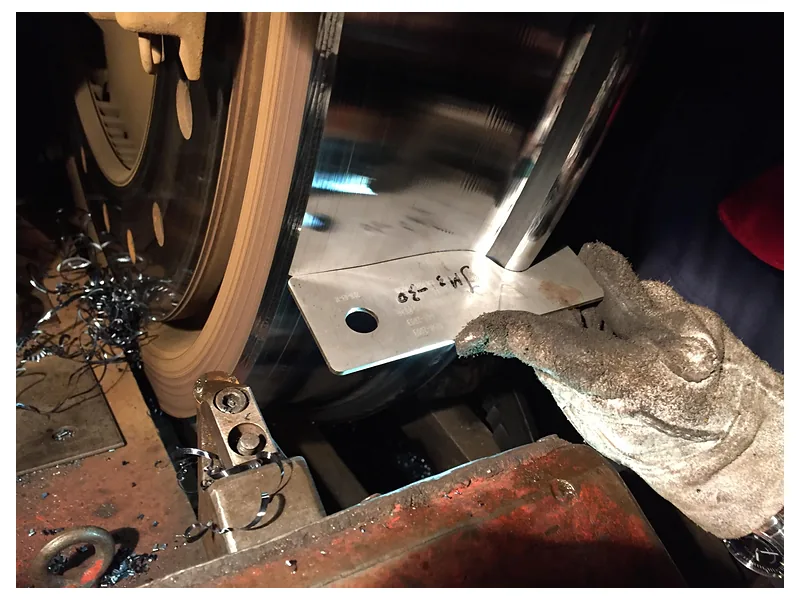
Wheel flats, tread hollow, high flanges, surface peeling and out-of-round wheels increase vibration and noise, hammer the track and shorten wheel life. CNC wheel truing removes only the metal needed to restore the design profile, which preserves the number of reprofiling cycles left before the wheel reaches its scrap diameter. The same applies to a mobile machine: the profile is programmed once and repeated consistently across the fleet.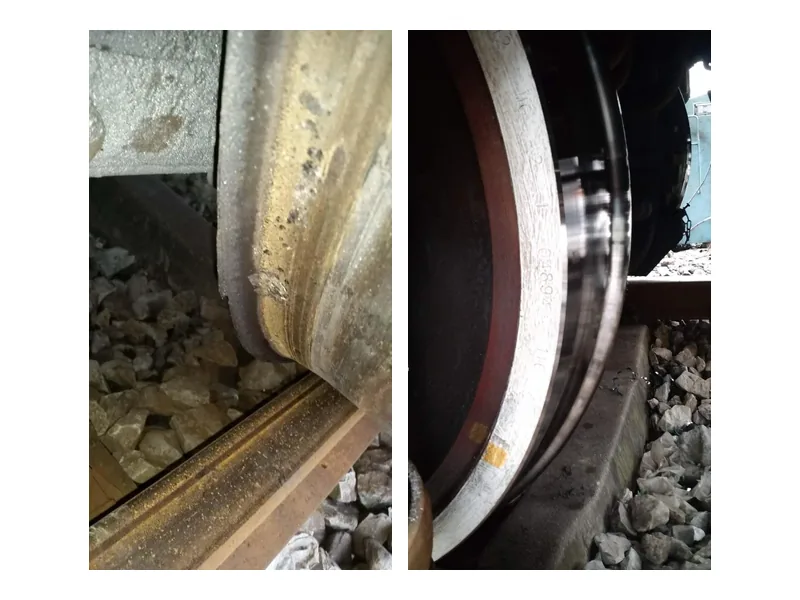
The machine is supplied with a separate CNC control cabinet and drive power units. The control system runs on 6.0 kW single-phase 220 V / 110 V, while the main drive uses 30 kW three-phase 380 V / 480 V, both at 50/60 Hz. Modular cabinets make commissioning and servicing simple: a faulty unit can be replaced without returning the whole machine.
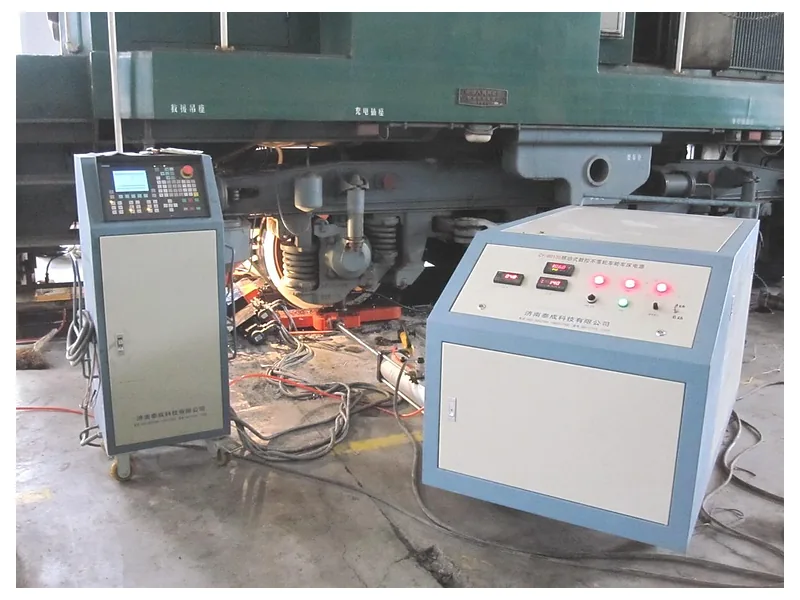
Yes. That is the purpose of an underfloor wheel lathe. The CY8013D machines the tread and flange with the wheelset installed, so there is no bogie disassembly, wheelset lifting or transport to a workshop lathe.
The specified machining range is 800-1300 mm wheel diameter with a maximum machining width of 150 mm, for axle loads from 10 to 40 t. This covers metro and light rail vehicles as well as heavy locomotives.
No. It can work in an existing maintenance trench, but it can also be used on ordinary track with a field work platform and auxiliary equipment. No permanent foundation is required.
JM, LM and TB contours to TB/T 449-2003 are supported, and other international wheel profiles can be programmed into the Siemens CNC system to match an operator's fleet standard.
The specification states machining accuracy below 0.5 mm, radial runout below 0.5 mm and tread roughness of Ra 12.7 µm or better, with a maximum depth of cut of 2.0 mm per pass.
A full tread cycle is specified at 10-15 minutes. Total vehicle turnaround also depends on setup, positioning and the amount of material to be removed, so it is normally longer than the cutting cycle itself.
Send your vehicle type, wheel diameter range, axle load, required wheel profile, site conditions and power supply to [email protected]. We will reply with the complete CY8013D datasheet, dimension drawing, power requirements and a recommended configuration for your depot.
Related products:Track Maintenance Tools & Equipment | Rail Grinding & Milling Machines | Rolling Stock Spare Parts | Steel Rails
We have recommended some of our Related products to you. I hope you will be interested.
 English
 Русский