
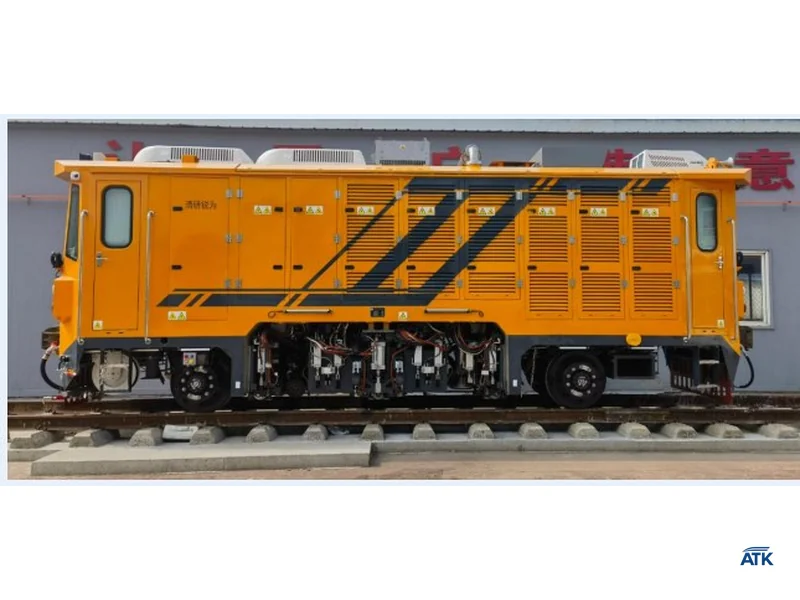
Compares milling and grinding by defect depth and site, not by machine; includes a defect-to-process table, four site constraints, three machine tiers, a buyer enquiry checklist and 10 FAQ.
A milling train and a grinding train both leave the track with a cleaner rail head, so buyers tend to treat them as two brands of the same thing. They are not. One cuts metal away with rotating cutters; the other polishes it off with abrasive stones. The surface looks much the same at the end. What differs is the steel removed, the defects each can fix, and the conditions each can work in — enough that the wrong choice wastes a possession and leaves the original problem in place.
This guide is about rail milling vs grinding as a decision, not a specification comparison. The tables for the machines sit on the rail milling and grinding trains page. What follows is the judgement that comes before the purchase: what the defect is, how deep it runs, what the site will allow, and which process answers it.
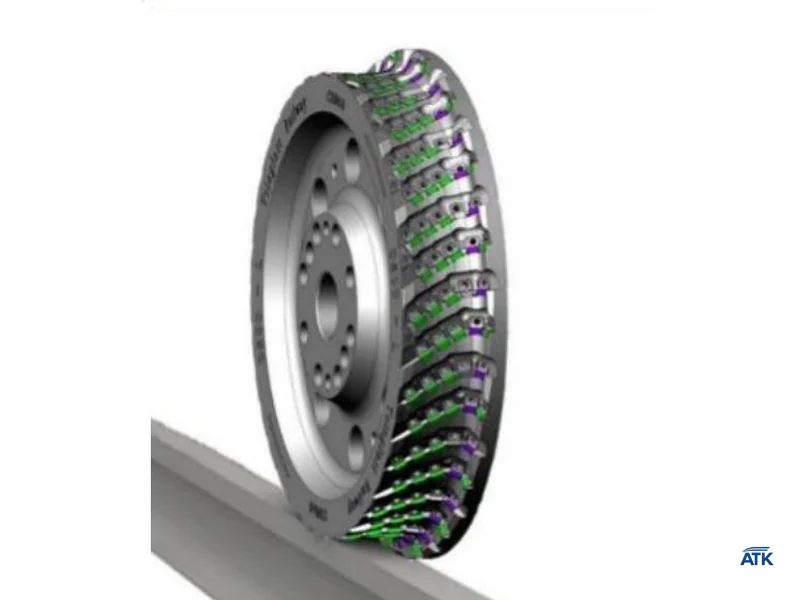
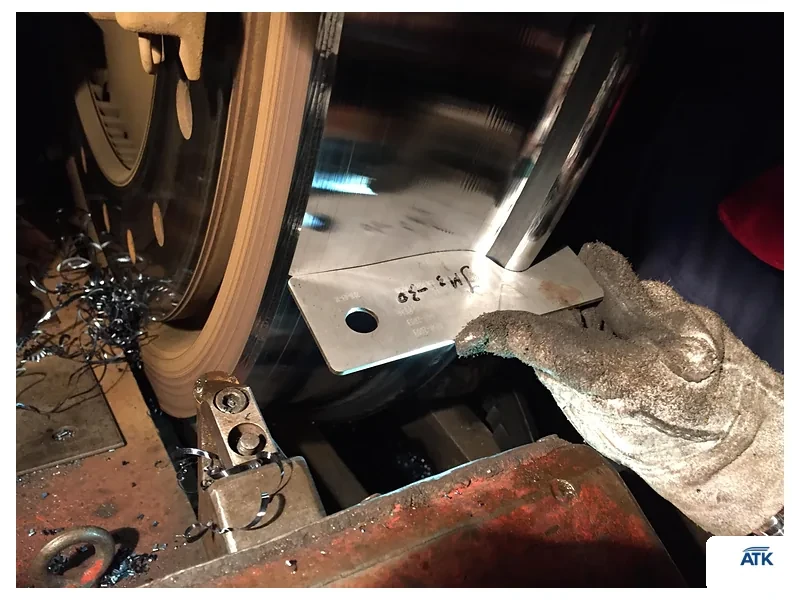
Milling is a cutting operation. A disc carrying cutter heads is pressed against the rail and machines the surface in a controlled pass. Because it cuts, it takes a substantial layer in one visit — on the order of a millimetre or more from the rail top, and more again from the side of the head. The result is a machined profile with a uniform finish, and the by-product is chips rather than sparks. A railway milling head of this kind is what sets milling apart from every abrasive method.
Grinding is an abrasive operation. A set of grinding stones is worked across the rail under light pressure, removing a thin layer on each pass. It takes many passes to reach the same depth that a cutter removes once. What it gives back is a smooth, low-roughness surface and a profile that can be shaped gradually without taking more steel than the section can spare.
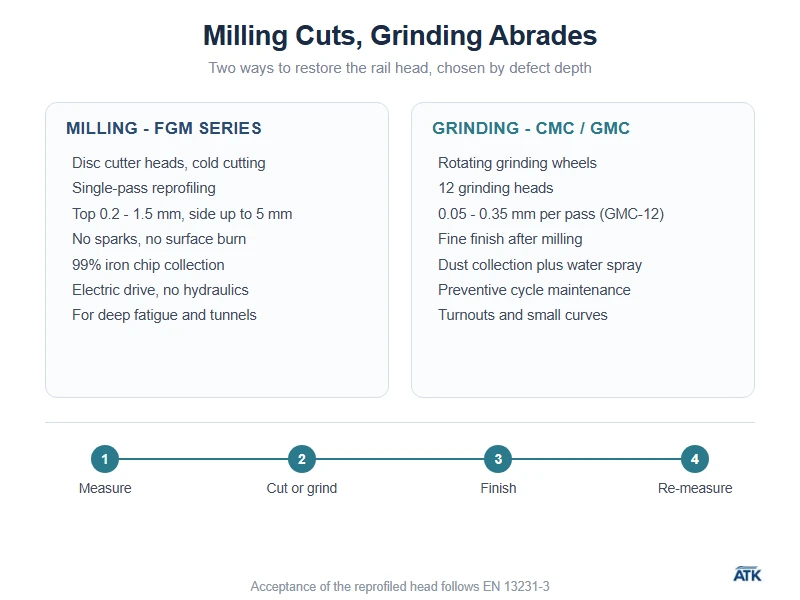
That single mechanical difference drives everything else. Milling cuts fast and deep but needs a heavier, more specialised machine. Grinding is slower per millimetre but gentler on the rail and easier to deploy on a short stretch of line. Neither is better in the abstract. Each fits a different defect and a different window of track access.
Buyers often start with the machine and ask what it can do. The useful order is the reverse: describe the defect, then find the process that removes it at the least cost to the rail.
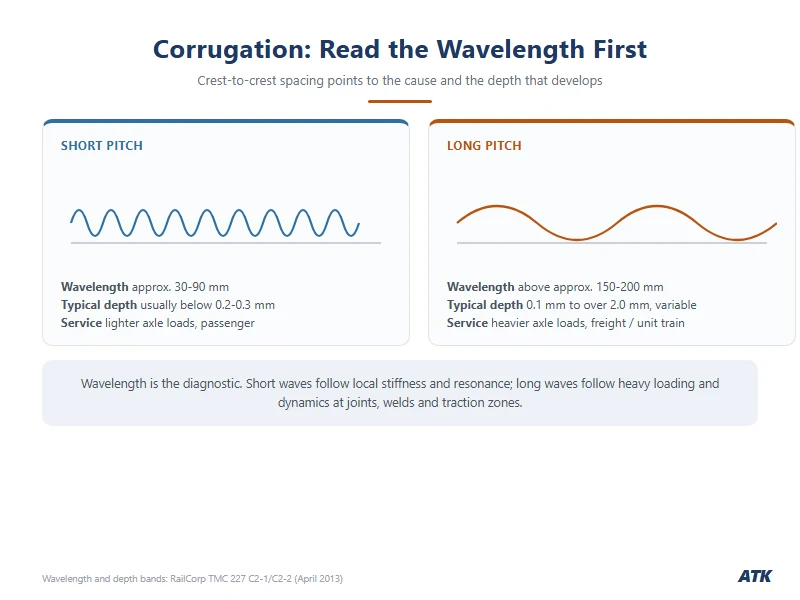
The dividing line is depth. Grinding is the right answer when the damage sits in the surface it can reach in a reasonable number of passes. Milling belongs where the defect has propagated below that layer and a ground rail would simply reveal the same crack a few weeks later.To identify the defect and grade its depth before choosing a process, see how to diagnose rail corrugation and head checks.
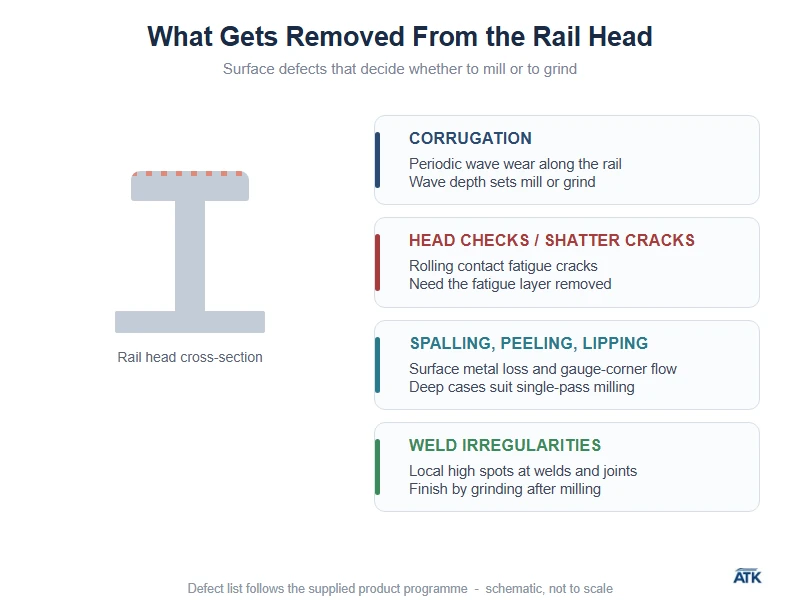
There is a second dividing line: profile versus finish. Grinding is good at finish. When the shape of the rail head itself has changed — side wear that has shifted the running band, a collapsed profile on a high-tonnage curve — the correction has to be cut back into the section. That is milling work. A trained operator can measure which case he has before ordering. On-board measurement systems on this class of equipment record the profile before and after, so the choice between milling or grinding rests on data rather than on appearance. Acceptance of the finished head follows EN 13231-3.
The numbers matter because they decide how much track a machine can cover in a possession and how many times it has to come back.
A cutter in the milling class removes in the range of one to two millimetres from the rail top in a single pass, and several millimetres from the side of the head. A grinding stone removes a small fraction of that per pass. Put another way, one run of a milling train may clear what takes a grinding train a whole shift of passes. Some defects never clear at all if the fatigue lies deeper than a stone can economically reach.
This is not an argument for milling everywhere. Taking steel off is a cost to the rail: every millimetre removed shortens the life of the section. On a network where the rail is sound and the problem is surface finish, the small pass of a grinding stone preserves metal that a cutter would waste. On a network where the rail is genuinely damaged, removing enough steel to get below the defect is the only thing that works, and the apparent saving of a lighter pass is false economy.
The working rate follows from the same fact. A milling train cuts at a walking pace through the damaged section and can combine profiling and finishing in a single run. A grinding train covers ground more slowly per pass but can work long stretches at a steady speed once the depth is right. Which one finishes the possession sooner depends on whether the job is deep and short, or shallow and long.
The defect rarely decides alone. The physical conditions around the track often rule one process out before the depth question is even asked.
Tunnels and enclosed spaces. Milling is a cold cutting process and collects its chips; it does not throw showers of sparks the way grinding can. Where fire risk and ventilation are constraints, this decides the matter. The collection system matters as much as the cutting head — a machine that cuts cleanly but leaves chips on the track is not finished.
Curves and gradients. Minimum curve radius, maximum gradient and cant set whether a long consist can reach the site and stand there safely. A large two-car train has a wider envelope than a single grinding car. Where the line is tight, the smaller machine may be the only one that physically fits, even if it is slower.
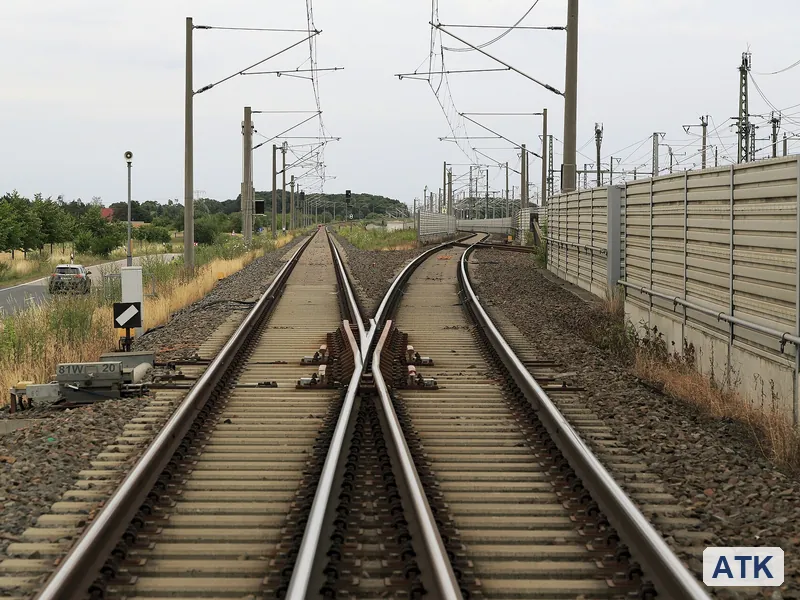
Turnouts and special track. A grinding unit can normally work through a turnout as part of a route. Milling capability in a turnout depends on the model and the options fitted, and should be confirmed against the specific layout rather than assumed. Networks with many turnouts often keep both processes precisely because neither covers the whole plant on its own.
Possession length. A machine that produces a better surface is useless if it cannot finish inside the window. The working rate has to be measured against the hours actually available, including getting to site, setting up and clearing away. A headline speed means nothing if the machine cannot finish inside the window — what counts is the time from possession start to the last check.
Given the trade-offs, it is not surprising that manufacturers combine the processes. A typical arrangement puts a milling station first and a grinding station behind it in the same consist. The cutter removes the damaged layer and restores the profile; the stones behind it take off the cutter marks and deliver the final surface finish.
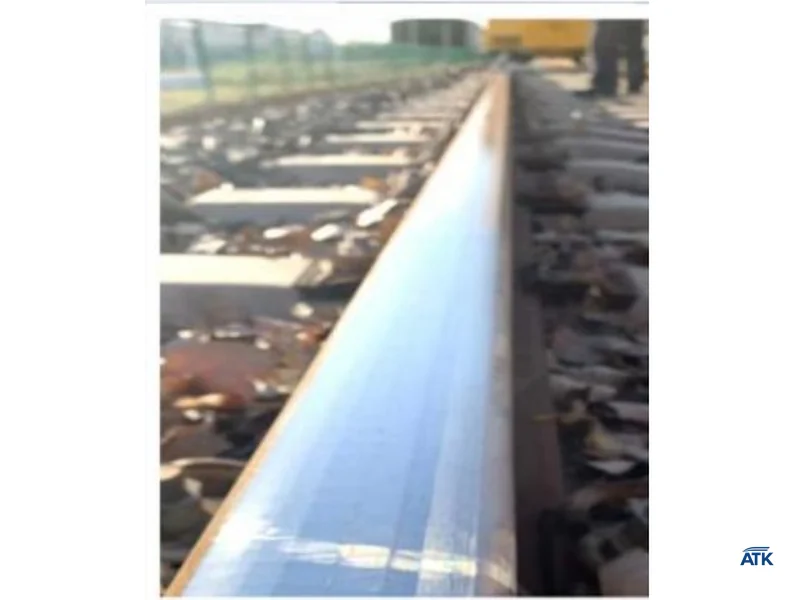
This is more than convenience. Milling leaves a characteristic ripple that, left alone, can feed back into the rail as a new corrugation. Following it with a light grind removes that ripple and gives the surface the roughness it needs. A combined train therefore does in one pass what two separate machines would otherwise do in two possessions — and avoids the risk that the second machine arrives weeks later, after traffic has reworked the milled surface.
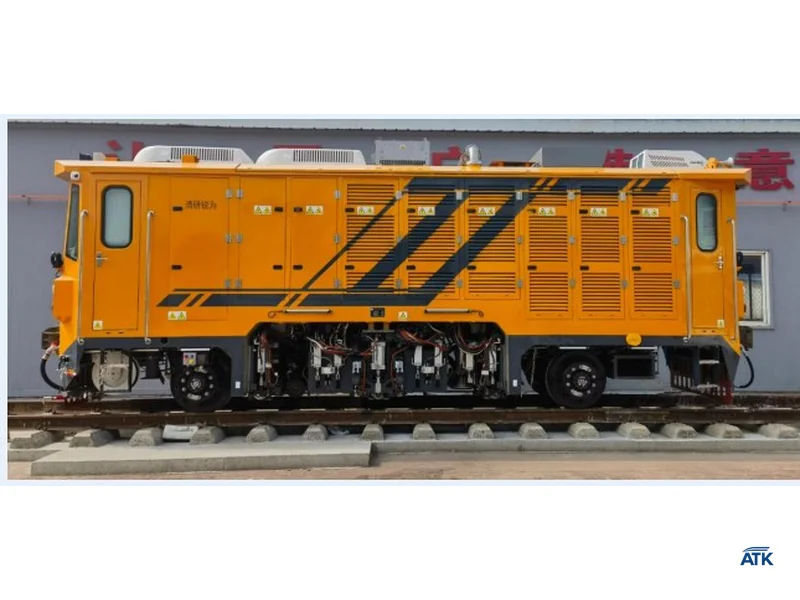
The caveat is capital and utilisation. A combined train is the most expensive option and only pays for itself where there is enough continuous work to keep it busy. A short network or a depot with a mixed, scattered workload is often better served by a single-purpose grinding car, hired or owned, used where it fits and accepting that deep defects will be handled differently.
Within each process the range splits into tiers, and the split follows the work rather than raw size.
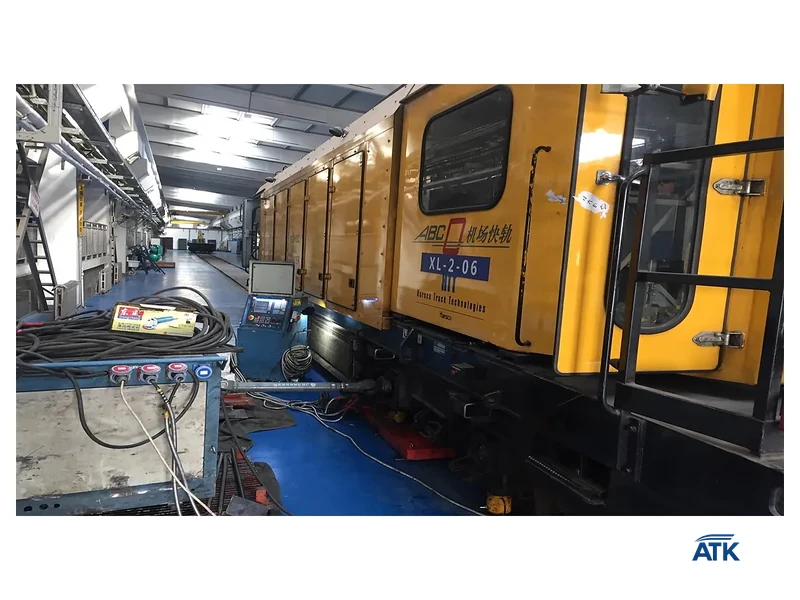
· A production milling train machines the running profile in a single cut, aimed at heavy damage and section restoration where the network has enough mileage to justify it. On-board measurement records the rail shape before and after the run.
· A full grinding train uses a larger number of stones across a long consist and covers heavy mileage at a steady rate. It is the maintenance workhorse for a network with routine surface defects spread over long distances.
· A light grinding car is a single small vehicle with fewer stones and a smaller footprint. It trades working rate for access: it fits short networks, depots, sidings and tight-clearance routes where a train cannot go.
The mistake to avoid is choosing by headline working speed. A production machine quoting a high metres-per-hour figure is only faster if the possession is long enough to use it, the defect is deep enough to need it, and the consist can reach the site. Answer those three questions first and the tier usually follows on its own.
An enquiry that reaches the right machine begins with the work, not a model number. The following details let a supplier separate a grinding job from a milling one at the first reply.
· Defect type and measured depth — the single most useful input; it decides whether grinding can reach the problem at all.
· Rail section and profile — sets the cutter or stone arrangement and the target shape.
· Track length and annual programme — decides whether a production machine is justified.
· Curve radius, gradient and cant — rules out equipment that cannot reach the site.
· Turnout count and layout — confirms whether milling is available through special track.
· Possession window — sets the required working rate including setup and clearance.
· Tunnel, fire and collection constraints — decides between cold cutting and abrasive methods.
· Gauge, including any narrow-gauge sections — a structural decision that has to be specified at order.
A profile measurement or a photograph of the defect answers several of these at once. So does a note on what has already been tried: a rail that has been ground twice and corrugated again is a different enquiry from one that has never been touched.
For the wider question of where milling and grinding sit alongside rail welding and wheel reprofiling, the track maintenance equipment guide sets out the whole maintenance cycle. For the separate decision between welding processes, see the flash butt versus thermite welding comparison.
Given enough passes it may, but each one lifts only a thin layer. When the damage sits well below the surface, milling clears it in a single run and grinding spends a shift chasing it.
Only if it is specified for a defect that did not need it. Taking metal off shortens rail life, so a mill is for damage below the surface, not for a finish pass.
Cutting leaves a fine ripple. The stones behind remove it and set the final surface finish, so the rail does not corrugate again quickly.
Grinding normally can. Milling capability in a turnout depends on the model and options, so confirm it against the actual layout.
Often yes. If defects are shallow and the network is small, a single light car covers the work without the cost of a train.
Measure the profile. On-board measurement records the rail shape and the depth of the wear, which removes the guesswork from the choice.
It cuts cold and collects its chips, which is why it is preferred where sparks and dust are a concern. Collection capacity still has to be checked.
Not unless multi-gauge operation was specified at build. Gauge is built into the vehicle, so it cannot be added to a machine ordered for a single gauge.
Comparing machines instead of defects. The depth and type of damage decide the process; the process then decides the machine.
Not always. Start with the one your rail condition calls for. Networks with both shallow routine wear and occasional deep damage often end up using both.
Tell us the defect, the rail section and the possession window, and we will point you to the process that fits before discussing models. The full specifications for the milling and grinding range are on the product page; this guide is here to make sure you are looking at the right machine in the first place.
We have recommended some of our Related products to you. I hope you will be interested.
 English
 Русский