
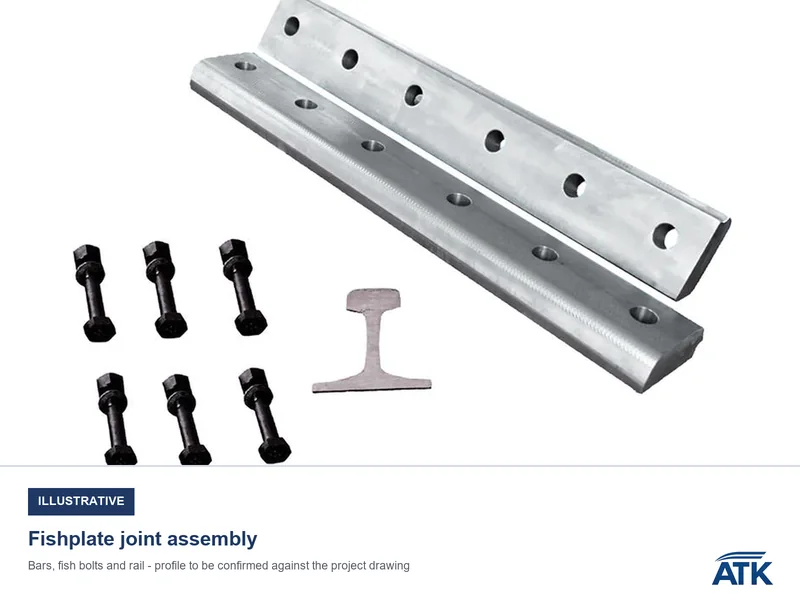
Two rail sections, one matching principle - a UIC54 (54 E1) bar will not seat on a UIC60 (60 E1) rail
Fishplates are selected against the rail drawing, not a catalogue mass table
Four-hole and six-hole arrangements, with hole pitch matched to the rail drilling
Material grade, heat treatment and test basis named by the project, not inferred from rail weight
Rolled or forged bars, punched or drilled to the approved drawing
Dimensional, material and finish inspection against the drawing, with reports shipped
Fish bolts, nuts and washers supplied to match the bar - insulated sets where track circuits require them
Send the rail section, hole arrangement and drawing for a specification-led quotation
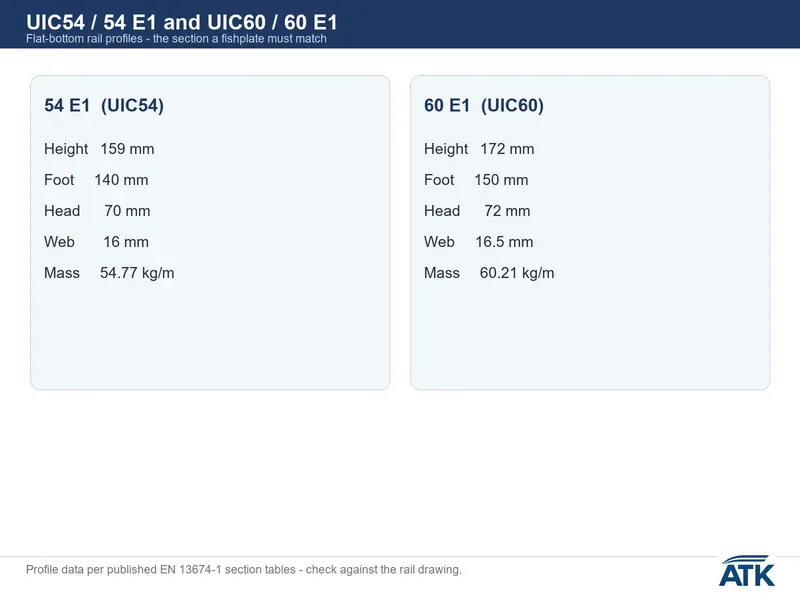
A buyer searching for UIC54 fishplates or UIC60 fishplates usually has a rail section in hand and needs the bar that fits it. The section is the starting point, not the whole specification. UIC54 and UIC60 are flat-bottom rail profiles — 54 kg/m and 60 kg/m — that European practice renamed 54 E1 and 60 E1 under EN 13674-1. The fishplate that belongs to one will not seat correctly on the other: the rail height, foot width, web thickness and the sloping fishing faces under the head are all different, so the bar's contact faces, hole pitch and bolt position have to follow the section it was designed for.
This page is about the joint bars used on those two sections. It covers the range, how a bar is matched to a profile, the dimensions that have to be confirmed before a bar can be ordered, and the checks that go with manufacture and inspection. A separate page covers fishplates and joint bars across all standards— AREMA, BS, AS, JIS, DIN and GOST as well as UIC — and that is where the full standards background sits.
One point before the detail: nothing here should be read as a published dimensional schedule for a UIC54 or UIC60 bar. Catalogue tables for these sections circulate with conflicting lengths, hole diameters and masses, and no single set of figures can be treated as universal. The dimensions in a purchase order come from the approved drawing and the contract, and this page explains how to get to that drawing rather than substituting a generic table for it.
A UIC54 or UIC60 fishplate is a pair of steel bars bolted through the webs of two rail ends to hold the joint in line and carry wheel load in bending and shear across the gap. Each bar sits in the fishing chamber under the rail head and above the foot, bearing on the sloping faces of the rail web. The pair is clamped with fish bolts, nuts and washers to restore as much stiffness as the detail allows. A bolted joint is still the weakest point in the track: each wheel pass produces impact at the gap, and rail ends and bars are replaced on a tonnage cycle long before plain rail reaches its limit. No fishplate makes the joint a continuous rail.
Both sections are used on main lines and heavy-duty track. UIC60, the heavier of the two, is the more common choice on high-speed and higher axle-load routes; UIC54 remains widespread on conventional lines and on industrial and older networks. The joint bar has to suit the section and the duty. A bar from a lighter section fitted to a heavier rail will not develop the contact or the clamping the joint needs, and the reverse leaves the bar loose on the web.
The same naming confusion exists in every market. Fishplate is the term most international tenders use; joint bar is the North American term; splice bar and angle bar appear in older specifications. All four describe the same component. What matters on an enquiry is not the name but the rail profile, the drilling, and the standard or drawing the bar is to be checked against.
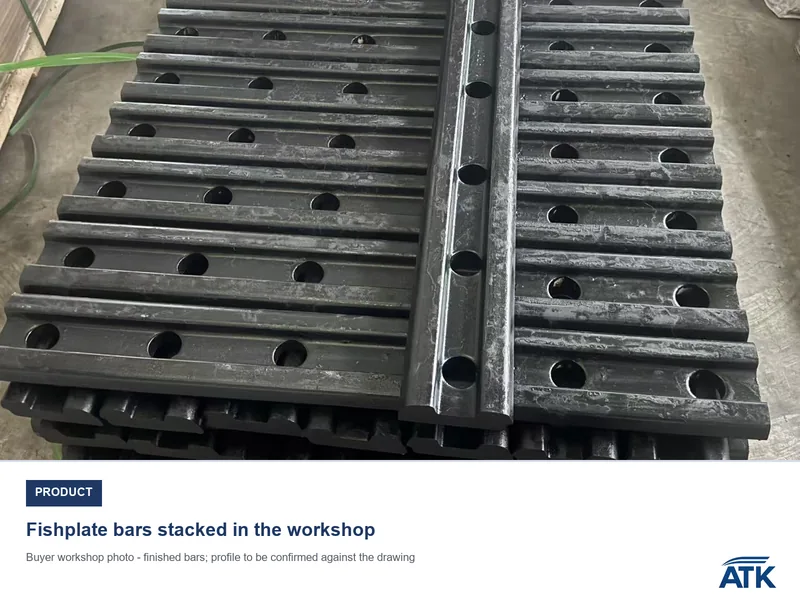
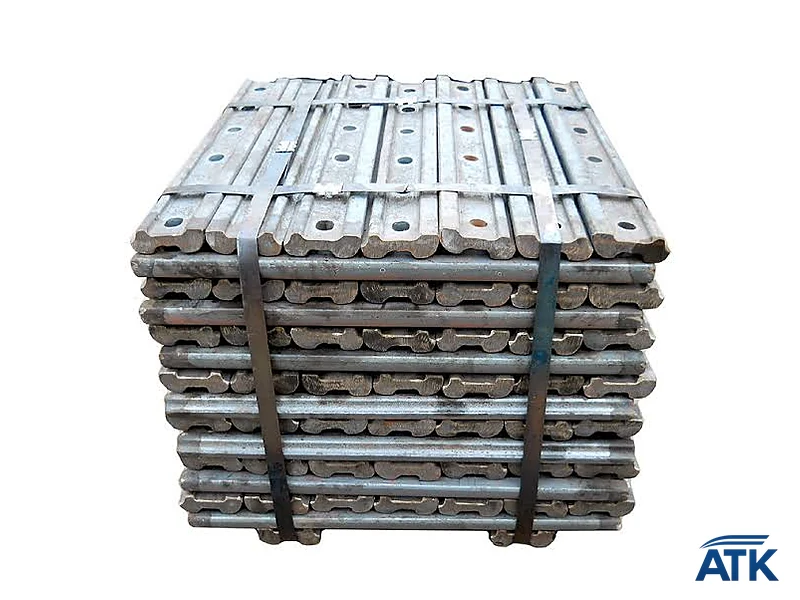
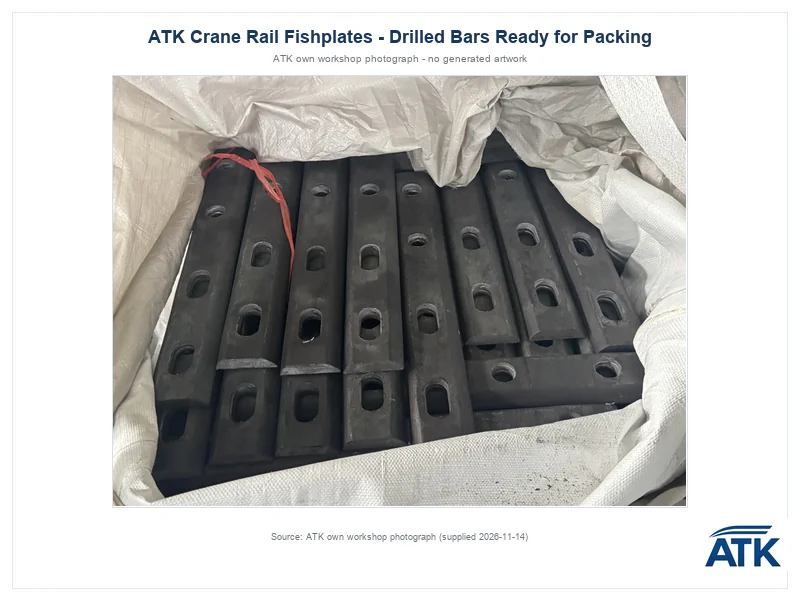
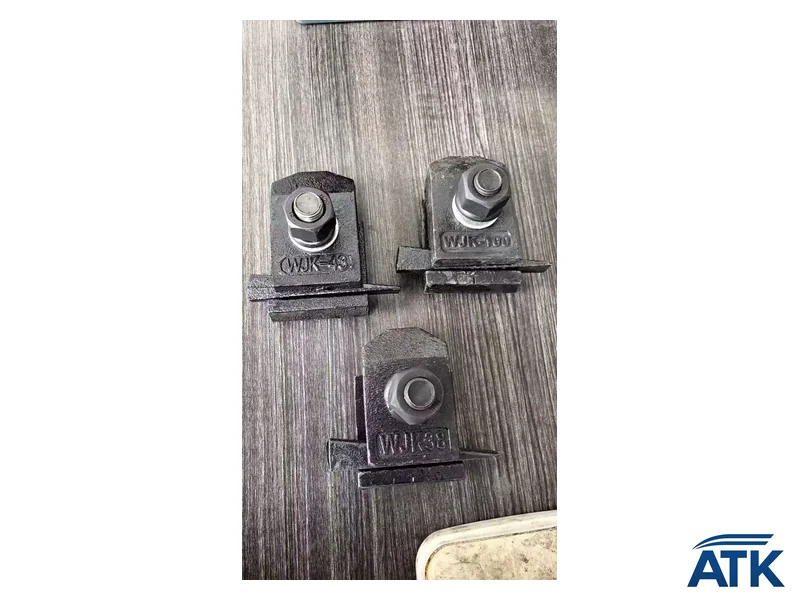
Finished bars leave the works stacked in pairs. The profile is cut into each bar, so the fishing faces and the drilling are what identify the section — weight alone does not. The photograph below shows finished bars from the workshop; the section for your order is confirmed against the drawing, not against a photograph.
The two sections on this page are:
Section | Also known as | Rail height | Foot width | Head width | Web thickness | Mass per metre |
UIC54 | 54 E1 (EN 13674-1) | 159 mm | 140 mm | 70 mm | 16 mm | 54.77 kg/m |
UIC60 | 60 E1 (EN 13674-1) | 172 mm | 150 mm | 72 mm | 16.5 mm | 60.21 kg/m |
These are the commonly published profile figures for the two EN 13674-1 sections, given here so the two can be told apart. They describe the rail, not the fishplate, and the rail drawing governs where a project is concerned.
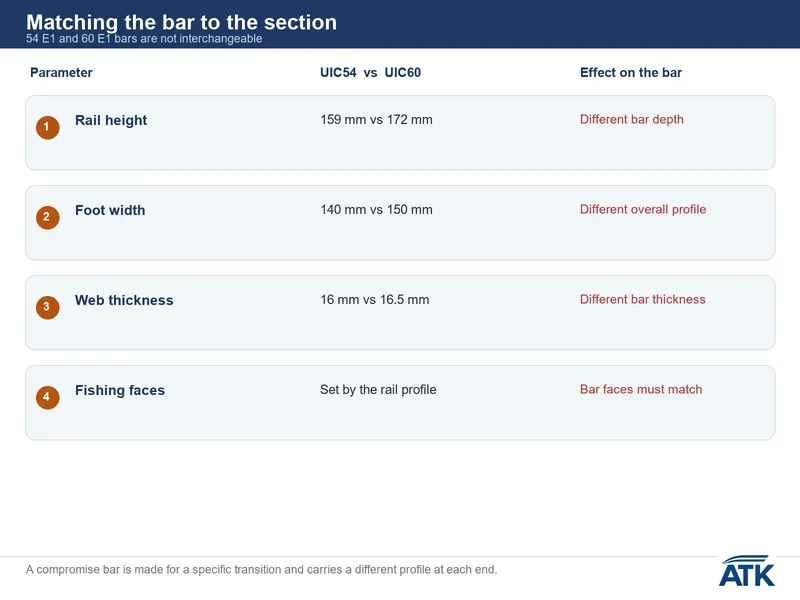
A fishplate is not selected by mass alone. The bar's fishing faces are shaped to the rail's web angle, its thickness follows the space between head and foot, and its holes are positioned to match the rail drilling. A 54 E1 bar and a 60 E1 bar may look similar at a glance, but the two cannot be interchanged: fitting a 60 E1 bar to a 54 E1 rail, or the reverse, gives poor seating, uneven clamping and an unstable joint.Where the two sections are being compared before an order - which dimensions follow the rail and which follow the drawing - the UIC54 vs UIC60 fishplate comparison sets out the checks.
Compromise bars. Where a joint connects two different sections — for example UIC54 to UIC60 — a standard bar cannot do the job. A compromise, or transition, bar is machined or forged with one profile at each end so that both rails are held correctly and their running surfaces stay aligned. This is a made-to-order item and belongs in a separate enquiry with both rail sections stated.The joint itself - the handed bar set, the hole patterns at each end and the drawing items - is covered in the compromise and combination fishplates article.
Before you order. Confirm the rail designation from the rail drawing or the standard it was rolled to. If the section is only described as "54 kg" or "60 kg", ask for the profile drawing: Chinese 60 kg/m, UIC60 (60 E1) and AS 1085.2 60 kg are three different sections, and a bar for one is not a bar for the others.
There is no single universal dimensional table for UIC fishplates. Published supplier tables disagree on bar length, hole diameter, hole spacing and mass for the same section. treating any one of those tables as a specification is how the wrong bar gets ordered.
What a complete UIC54 or UIC60 fishplate specification fixes is set out below. Values are taken from the approved drawing and the contract; the table describes the fields, not the numbers.
Field | What it defines | Why it matters |
Rail section and standard | UIC54 / 54 E1 or UIC60 / 60 E1, with the rail drawing number | Sets the fishing angle, bar depth and hole position |
Bar profile | Outline to match the rail web and fishing faces | Determines whether the bar seats on the rail |
Length | Depends on hole count and the drilling pattern | A four-hole and a six-hole bar are different lengths |
Hole count | Four or six, as the drawing and joint design require | Six-hole bars spread load over a longer joint |
Hole diameter and pitch | Bolt clearance and spacing along the bar | Must match the rail drilling exactly |
Bar height and thickness | Section of the bar itself | Controls stiffness and where load is carried |
Mass | Given per pair | Used for shipping and for checking against the drawing |
Material and heat treatment | Grade and condition | Sets strength and hardness |
Surface finish | Plain, painted, oiled or galvanised as specified | Corrosion protection and site handling |
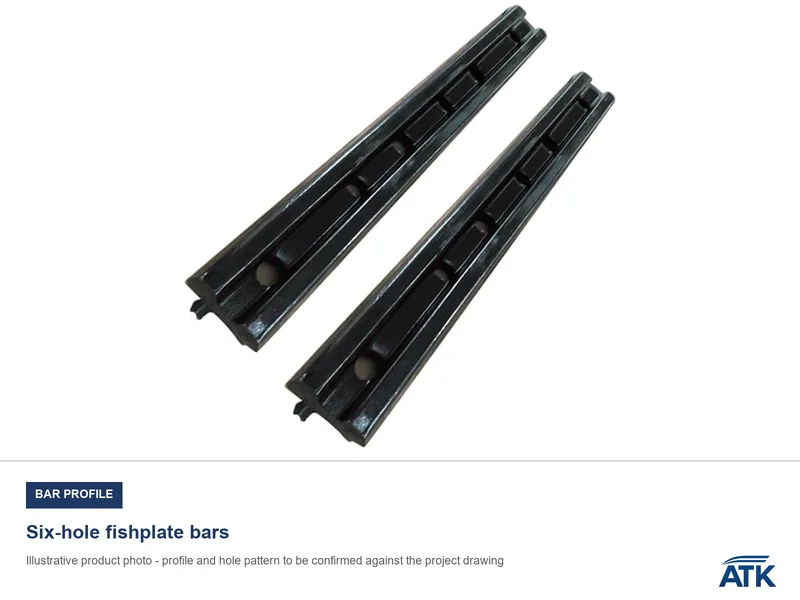
If you need a quote, send the rail section, the hole arrangement and the drawing or standard the bar is to meet. Where no drawing exists, the section and the drilling can be confirmed first, and the bar detailed from that. The alternative — picking a catalogue row because its mass looks close — is the usual route to a joint that will not go together on site.
Four-hole and six-hole bars are both used on UIC sections. The choice follows the joint design and the rail drilling, not preference. A four-hole bar uses two bolts on each side of the joint; a six-hole bar uses three, spreading clamp load and bending resistance over a longer length. Main-line and heavier-duty joints more often call for six holes, but the contract drawing decides.
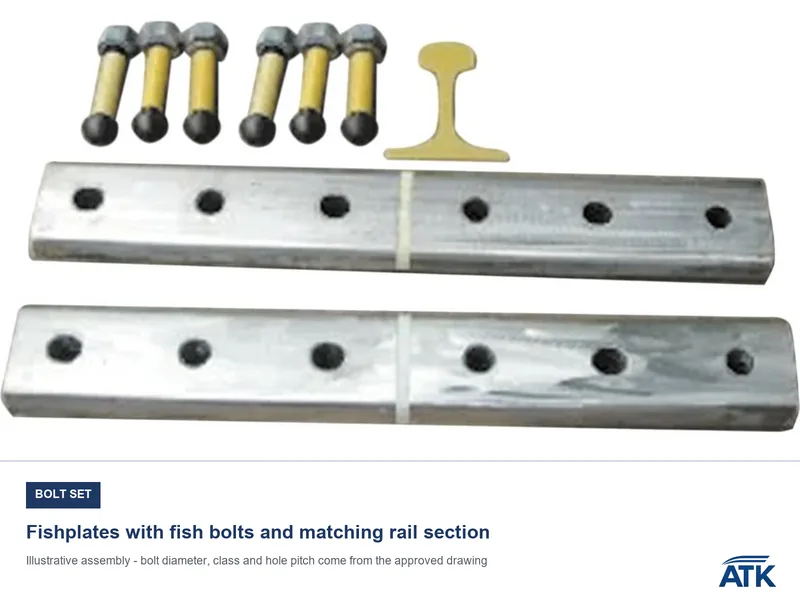
Hole geometry has to match two things at once: the bar's own pitch and the rail drilling. If the holes are punched or drilled to a different pitch from the rail, the bolts cannot be fitted without forcing, and any attempt to enlarge holes on site changes the joint. Holes are punched or drilled to the drawing, with edges deburred, and the bar is checked against a sample rail or a drilling template before release.
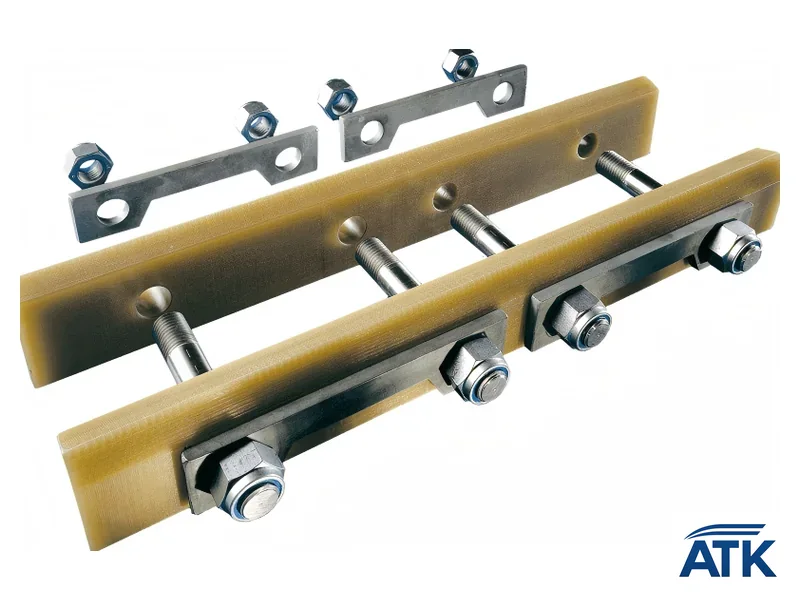
Insulated joints are a separate case. Where track circuits are in use, the joint has to break the electrical path, and the bar, bolts, washers and sleeves form an insulated assembly to its own drawing. A standard conducting fishplate is not substituted into an insulated joint, even when the rail section is the same.
Material for a UIC54 or UIC60 bar is specified by the project, not inferred from the rail weight. The market quotes a range of carbon and medium-carbon steels — grades such as 40#, 45#, 50#, 55#, and equivalents under other national systems — with the choice driven by axle load, joint duty and the standard named in the contract.
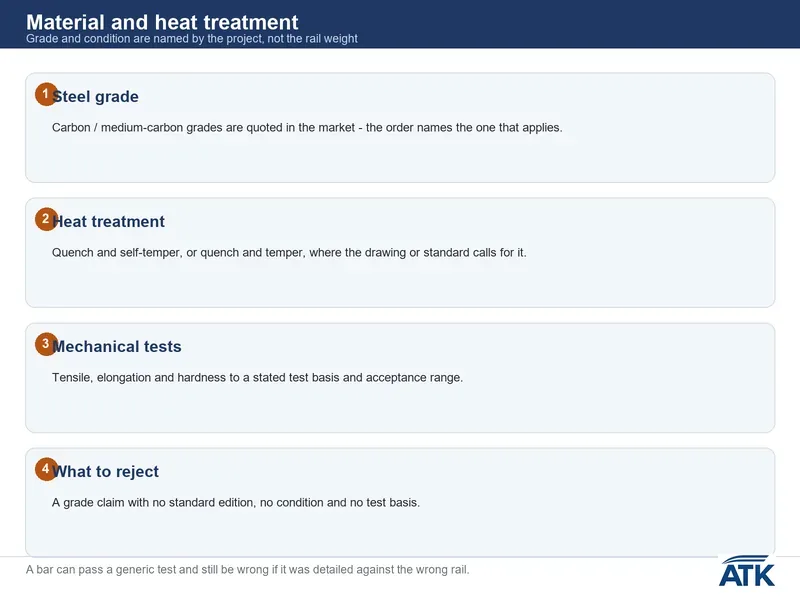
Heat treatment is as important as the steel grade. Quenching and self-tempering, or quenching and tempering, produce the hardness and toughness a joint bar needs; the same grade in an untreated condition behaves differently under repeated wheel load. Where a standard or drawing calls for a hardness range or a mechanical-property test, that requirement is written into the order and the inspection plan.
What should not appear on a quotation is an unverified grade claim. If a supplier offers "55 steel to UIC" without a standard edition, a grade designation and a test basis, the offer is not a specification. Ask for the material certificate basis and the heat-treatment condition before comparing prices.
Bars are produced by rolling or forging, followed by punching or drilling and, where required, heat treatment.
Rolling. A section is rolled to the bar profile and cut to length. Rolling suits long runs of a standard section. The rolled bar still has to be punched or drilled to the rail drilling pattern and finished to the drawing.
Forging. A heated billet is formed in a die. Forging is used for shorter runs, heavier sections and compromise bars where the profile changes along the length — a transition bar needs one fishing profile at each end, which a single rolled section cannot give.
Hole production. Holes are punched or drilled to the drawing. Punching is fast and suited to repeat work; drilling is used where the drawing calls for it or where the hole quality demands it. Either way the bar is checked against the drilling before it leaves the works.
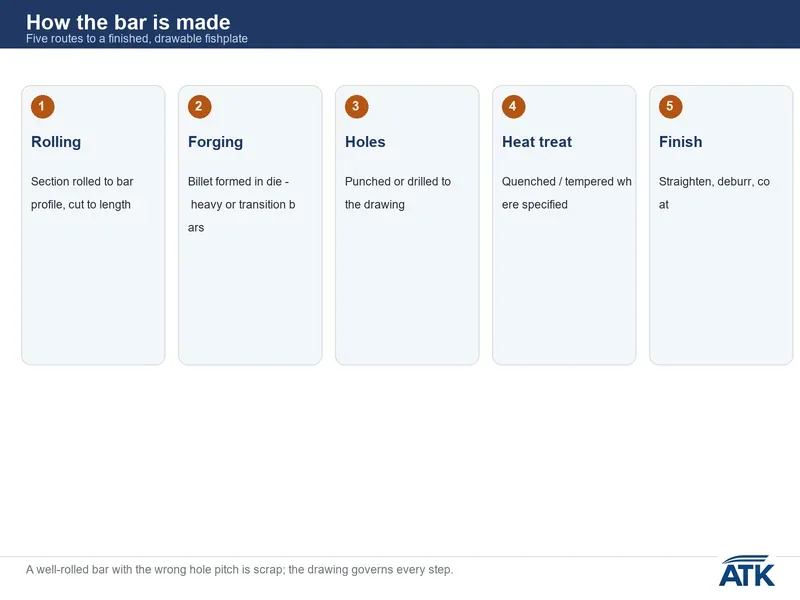
Heat treatment and finishing. Quenched and tempered, or quenched and self-tempered, condition is applied where specified. The bar is then straightened, deburred and given the surface finish the order calls for — plain, painted, oiled or galvanised.
Nothing in this route is a substitute for the drawing. A well-rolled bar with the wrong hole pitch is scrap, and a correctly drilled bar in the wrong material is worse, because the fault only appears in service.
Inspection starts at the drawing and ends at the delivered batch. Every check asks the same question: does this bar match the section and the joint it was ordered for?
Dimensional checks. Profile against the rail fishing faces, overall length, bar height and thickness, hole count, hole diameter and hole pitch. The bar is checked against the approved drawing and, where possible, against a rail sample or drilling template. A bar that cannot be offered up to the rail is rejected at this stage, not on site.
Material and mechanical tests. Chemical composition and mechanical properties are checked against the grade and heat-treatment condition named in the order. Where the contract specifies tensile strength, elongation, hardness or impact requirements, the test basis and acceptance values are stated before production and reported with the goods. A hardness figure without a test method and a stated range is not an acceptance criterion.
Surface and finish. Bars are examined for laps, cracks, excessive scale and damage at the holes. Deburring matters: a burr left at a bolt hole interferes with seating and hides a start of cracking. The specified finish — plain, painted, oiled or galvanised — is checked for coverage and for damage in transit.
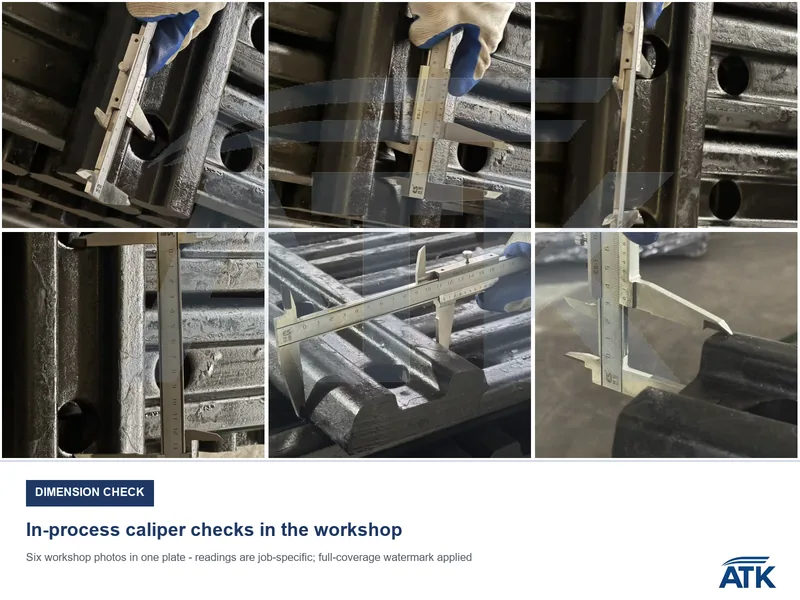
The plate below brings together six in-process dimension checks from the workshop: bar section, hole diameter and thickness measured at different stations. The readings belong to the parts that were being made and are job-specific; they are not values to quote for a different order. What matters here is that each dimension is measured against the drawing before the bars are released.
Third-party inspection can be arranged when a project calls for it, with the scope and acceptance basis agreed before the visit. Material certificates, a dimensional report and the relevant test records accompany the shipment. What those documents cannot do is replace the drawing: a bar can pass every generic test and still be the wrong section if it was detailed against the wrong rail.
A fishplate is only as good as the bolt set that clamps it. The bolt, nut and washers have to suit the bar's hole diameter and the joint design, and the property class has to be stated on the order.
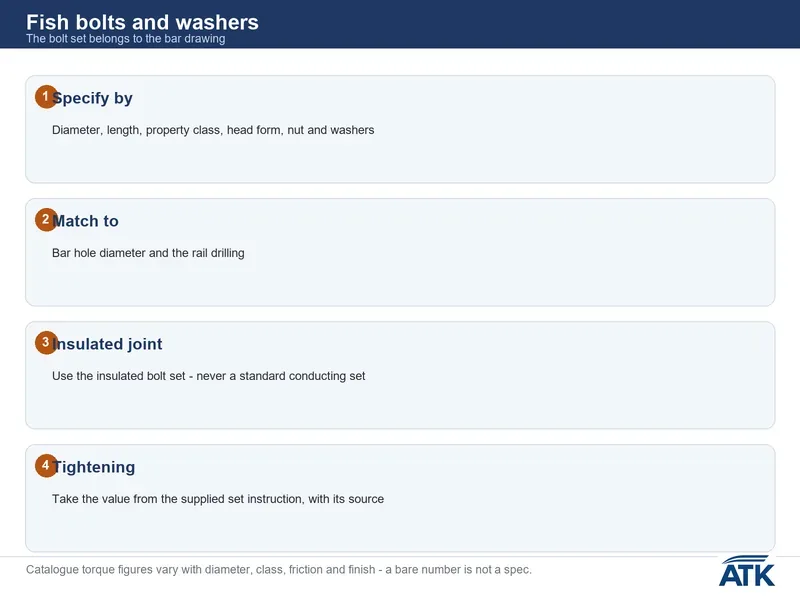
Fish bolts for UIC54 and UIC60 joints are specified by diameter, length, property class and head form, together with the matching nuts and washers. Suppliers' catalogue tables list different diameters for these sections, which is another reason to take the value from the bar drawing and the rail drilling rather than from a generic chart. Where an insulated joint is involved, the bolts and washers are part of the insulated assembly and are supplied with the correct sleeves and washers — a standard conducting bolt set does not belong in that joint.
Tightening follows the assembly instruction for the bolt set supplied. Catalogue torque figures for fish bolts vary widely because diameter, property class, thread condition and surface treatment all change the result; a number quoted without those details is a placeholder. If the project uses a specified torque or a turn-of-nut method, it should be written into the method statement with its source.
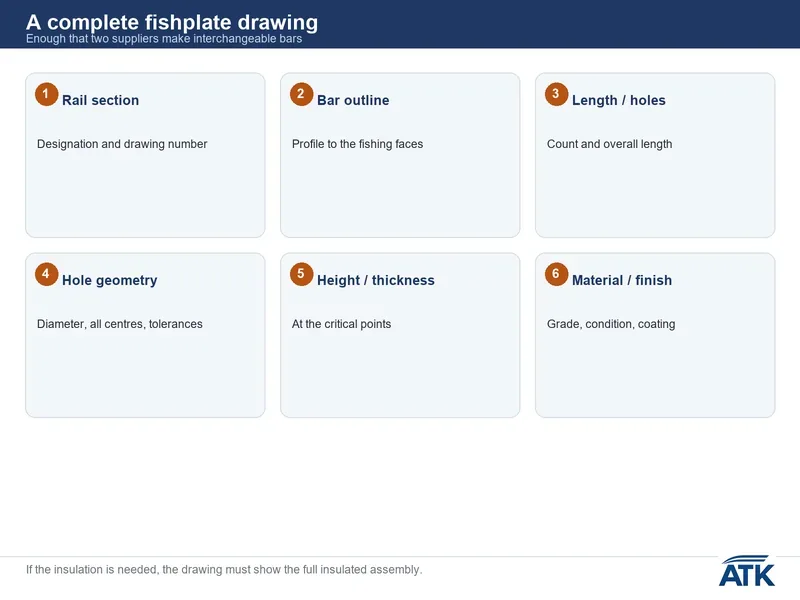
A fishplate drawing has to be complete enough that two suppliers produce interchangeable bars. The items most often left out are the ones that decide whether the joint fits.
Drawing item | What must be shown |
Rail section | Designation and rail drawing number, not just kg/m |
Bar outline | Profile matching the fishing faces of that rail |
Length and hole count | Four or six, with overall length |
Hole diameter and pitch | All centres, with tolerances |
Height and thickness | Bar section at the critical points |
Material and condition | Grade, heat treatment and test basis |
Surface finish | Plain, painted, oiled or galvanised |
Insulation | If the joint is insulated, the full insulated assembly |
Where a buyer has no drawing, the rail section and drilling can be confirmed first and the bar detailed from them. What should not happen is a bar being ordered from a photograph or a mass table.
UIC54 and UIC60 fishplates are used wherever those sections are joined without welding: main-line track built to UIC profiles, conventional and higher-speed routes, heavy-haul lines, industrial sidings rolled to UIC sections, and maintenance or emergency repairs where a cut rail end has to be re-joined. The joint bar follows the rail profile and the joint design, whatever the operator calls the line.
The duty decides the details. A high-frequency passenger line will specify a tighter inspection and a defined bolt set; a low-speed industrial siding may accept a lighter arrangement. In every case the bar has to match the rail and the joint design, and changing duty is a reason to review the selection rather than to fit the same bar again.
Installation is a site sequence, and the record matters as much as the torque.
1. Confirm the parts. Check the bar marking, rail section and bolt set against the drawing before the joint is opened. A bar for a different section is rejected, not adapted.
2. Prepare the rail ends. Clean the fishing faces of scale, paint and burrs. Check the rail drilling and the gap, and confirm the ends are aligned.
3. Fit the bars. Place a bar each side of the web, with the fishing faces seated on the rail. The bar should sit flat before any bolt is tightened.
4. Fit bolts and washers. Assemble the bolt, washers and nut in the order specified for the set. The washers are part of the joint and are not optional.
5. Tighten progressively. Bring both bars up evenly, alternating bolts, to the value in the approved method statement. Do not take a torque figure from an unrelated catalogue.
6. Re-check and record. Re-check after the joint has been loaded, apply witness marks and record the values, the rail temperature and the station reference. Insulated joints follow their own assembly instruction.
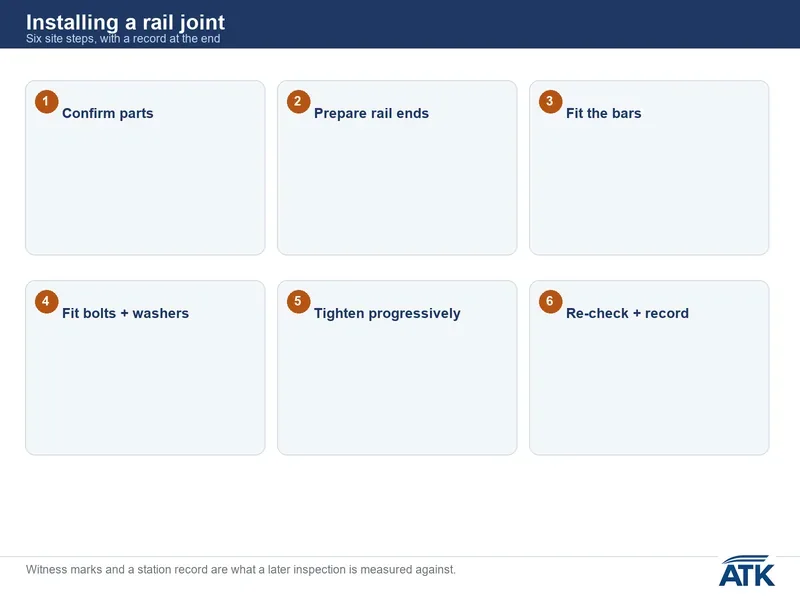
For the wider sequence of rail joint checking and the conditions that stop a job, see the rail joints and fishplate installation reference on this site. The installation record is what a later inspection is measured against.
Bars are made to the drawing, not to a catalogue description. The following are normally open to confirmation on a project:
- Bar profile and hole arrangement to the rail section and drilling.
- Length and hole count where the joint design differs from the common four- or six-hole layouts.
- Material grade and heat treatment to the standard and duty named in the contract.
- Surface finish — plain, painted, oiled or galvanised.
- Insulated assemblies where track circuits are in use.
- Marking and packing to the project's identification requirements.
What is locked by the system is the rail profile itself and the standard it was rolled to. A bar cannot be customised into fitting a section it was not designed for. Supply is made to the approved drawing; the bar does not replace the rail or joint design.
They are the same rail section. UIC54 is the traditional UIC name; 54 E1 is the designation under EN 13674-1, which absorbed the old UIC 861-5 profile. The same applies to UIC60 and 60 E1.
No. The rail height, foot width, web thickness and fishing faces differ, so the bar will not seat correctly and the joint will not hold alignment. Use the bar detailed for the rail section on the drawing.
Both four-hole and six-hole arrangements are used. The choice follows the joint design and the rail drilling in the contract, not a default.
Supply to IRS 80864-4 can be confirmed for a project, but the edition, rail profile and inspection basis have to be named in the contract — "manufactured to UIC standard" on its own is not a specification. The AREMA vs UIC fish plate standards explained page sets out which document is current and how the old UIC leaflets were consolidated; this page deals with the product and the section it fits.
Published supplier tables give different lengths and hole diameters for the same section. The length for your order is the one on the approved drawing, matched to the rail drilling. Send the section and drilling details and the bar will be detailed from them.
The grade is specified by the project. Carbon and medium-carbon steels such as 40#, 45#, 50# and 55# are quoted in the market, with heat treatment set by the duty. The grade and condition for your bars come from the contract, not from the rail weight.
Yes. Bolts, nuts and washers are supplied to match the bar's hole diameter and the specified property class. For insulated joints, the insulated bolt set is supplied with the assembly.
Yes, to a drawing showing both rail sections. A compromise bar is made for a specific transition and cannot be treated as a standard UIC54 or UIC60 bar.
Against the approved drawing: profile, length, height, thickness, hole count, diameter and pitch, then material and mechanical tests where the contract calls for them, and a finish check. Certificates and reports accompany the goods.
The rail section or drawing, the hole arrangement, the standard or bar drawing the joint is to meet, the quantity, and the delivery window. With those, feasibility and price come back in one reply.
Send the rail section and the drawing or standard for the joint, and the quantity. If the section is only known as "UIC54" or "UIC60", state that and the drilling details can be confirmed first. Bars are quoted and made against the confirmed specification, and inspection documents go out with the goods. For the full range of standards and naming conventions, see the fishplate and joint bar overview; to discuss a specific project, use the Contact Us page.
We have recommended some of our Related products to you. I hope you will be interested.
 English
 Русский