
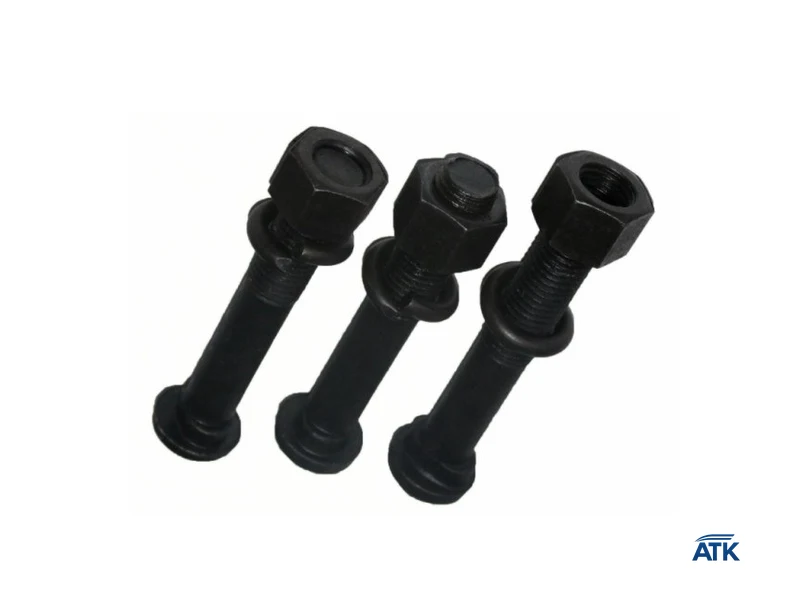
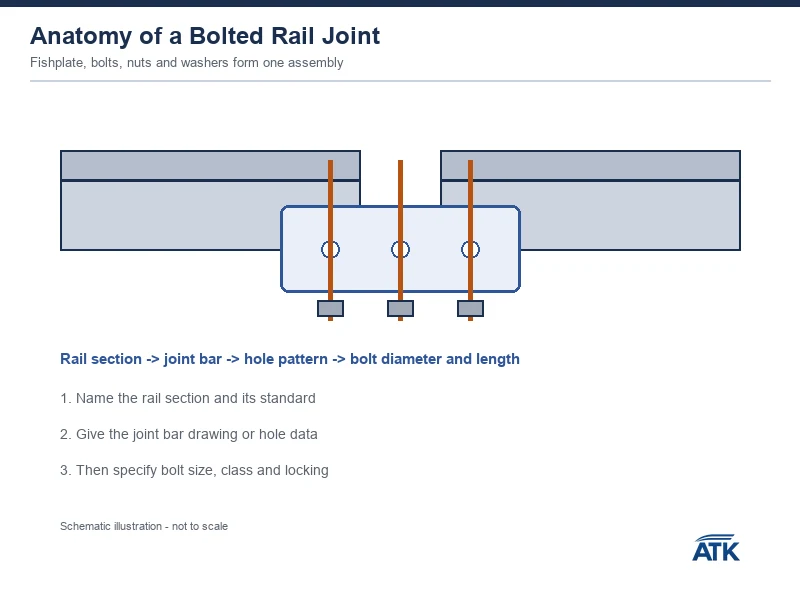
A fish bolt is specified by the joint it clamps - rail section, joint bar, holes, bolt, nut and washer are one assembly
TB/T 2347-1993 uses 8.8S and 10.9S for rail joint bolts; ISO 898-1 uses 8.8 and 10.9 - the systems are not interchangeable
Current ASTM A183 describes heat-treated track bolts; the Grade 1 and Grade 2 split belongs to older revisions
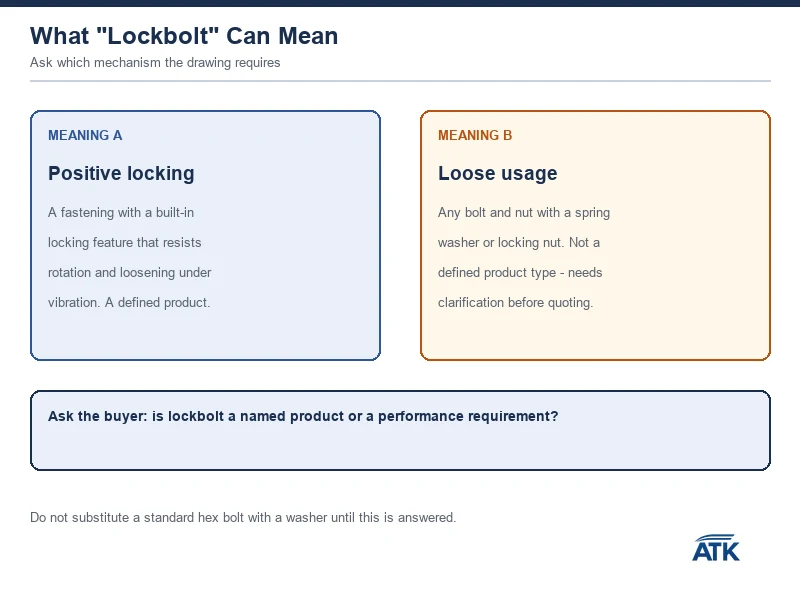
Lockbolt may mean a positive locking product or be used loosely for a washer and nut - ask which is required
Insulated joints need sleeves, washers and end posts as a complete set, not steel bolts alone
Send the bar drawing, rail section, grade as written, locking method and torque source for a firm quote
A fish bolt is specified by the joint it clamps. The bolt, nut, washer, hole diameter and joint bar belong to one assembly, and changing one of them changes the others. Yet enquiries for railway fish bolts often arrive as a grade and a quantity with no mention of the rail section or the bar drawing. The quotation that follows is then a price for a part that may not fit the joint.
This guide sets out how fish bolts are named, where the common grade systems differ, what "lockbolt" actually describes, and the fields that belong on an order. It stays away from catalogue torque figures and guessed dimensions, because those belong to the drawing and the project specification.
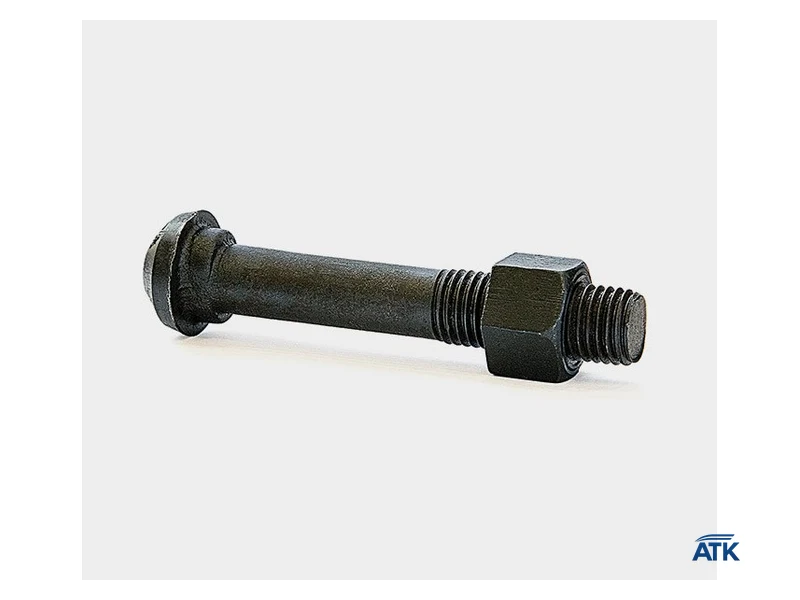
The same joint appears under several names in English-language enquiries. "Fish bolt", "fishplate bolt", "joint bar bolt" and "rail joint bolt" all point at the fastener that passes through a rail joint bar. "Track bolt" is broader and can include anchor bolts and fastening bolts for clips. "Lockbolt" is used in two ways, which is where trouble starts.
In its technical sense, a lockbolt is a two-part fastener: a hardened pin with annular grooves and a metal collar that is swaged into those grooves by a special tool. The clamp comes from the swaged collar, not from turning a nut to a torque figure. It needs no re-torquing and resists vibration well. Huck-type lockbolts are the best-known example.
The word is also used loosely on supplier pages for any bolt with a locking nut or spring washer. Those are different products. When a specification calls for lockbolts, confirm whether it means a swaged collar system or a conventional bolt with a locking feature before quoting.
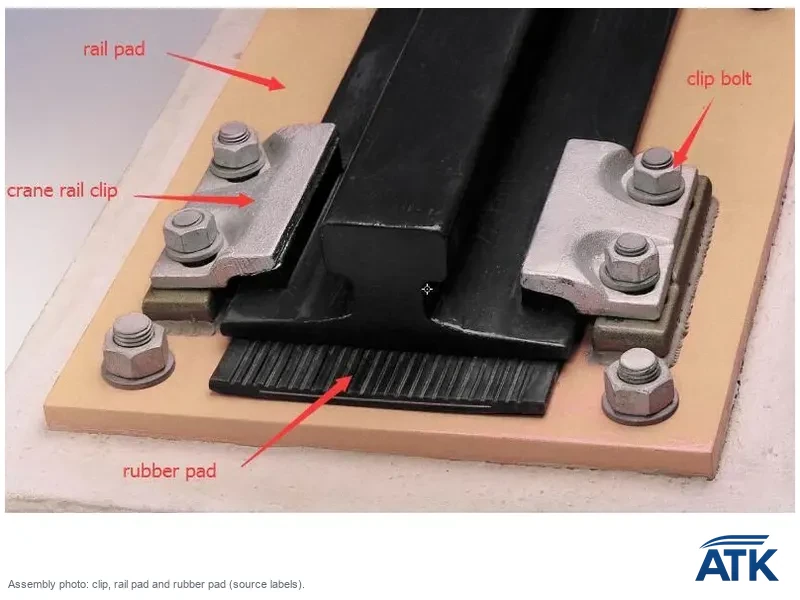
The rail industry also uses "frog bolt" for the fasteners at a crossing and "hook bolt" for the bolted clip used on crane runways. Neither belongs on a fishplate joint enquiry. Mixing crane-rail terms into a mainline joint order is a reliable way to receive the wrong hardware.
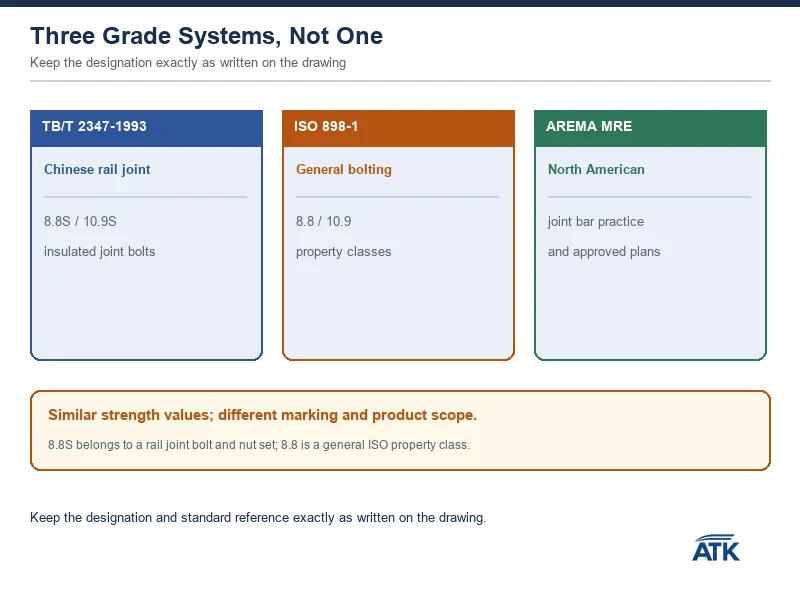
Two grade systems show up on drawings for fish bolts, and they are often written as if they were interchangeable.
Chinese rail practice uses TB/T 2347-1993, *High-strength rail joint bolts and nuts*, for 43, 50, 60 and 75 kg/m rail joints. Its property classes carry an S suffix, written 8.8S and 10.9S in the standard table. On broad-gauge work the matching document is GOST 11530-2014, which covers M22, M24 and M27 joint bolts for P38 to P75 rails; the plates those bolts clamp are GOST fishplates made to GOST 33184-2014.
International bolting practice uses ISO 898-1 classes such as 8.8 and 10.9 without the S. Here the distinction needs care. The strength values in TB/T 2347 correspond to the ISO 898-1 minimum values for larger diameters, so the two systems are not based on unrelated strength scales. What differs is the marking and the product context: a rail joint bolt marked 8.8S belongs to a rail joint bolt and nut set, while a generic 8.8 fastener does not carry that application requirement. Keep the suffix and the standard reference as written on the drawing.
North American practice follows AREMA recommended practice and the approved joint detail. AREMA Manual MRE treats joint bars and their fasteners in the rail section; current editions do not use the old Chapter 3 numbering that still appears on some supplier pages. ASTM A183 covers track bolts, and its current edition describes heat-treated bolts rather than the Grade 1 and Grade 2 split found in older revisions.
Put the designation from the drawing on the enquiry exactly as written. If a buyer translates 8.8S into 8.8 to make the order "international", the receiving supplier loses the information that mattered.
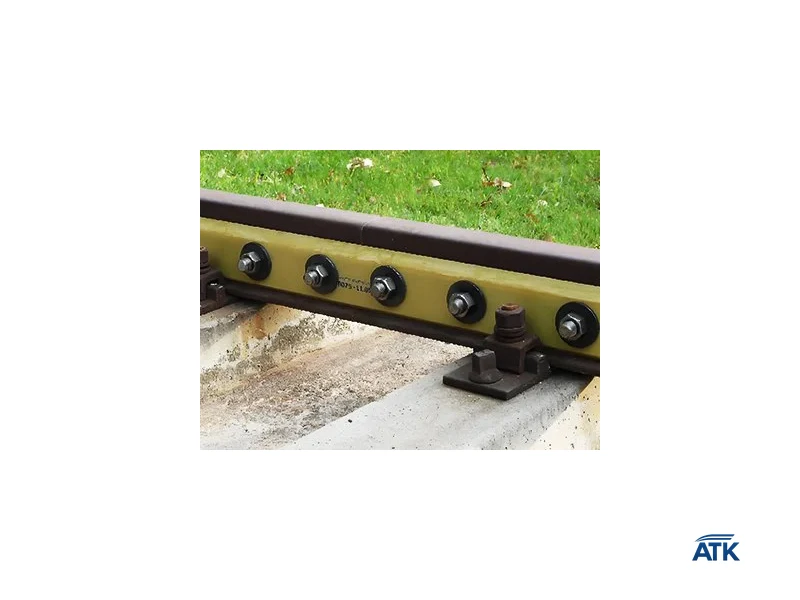
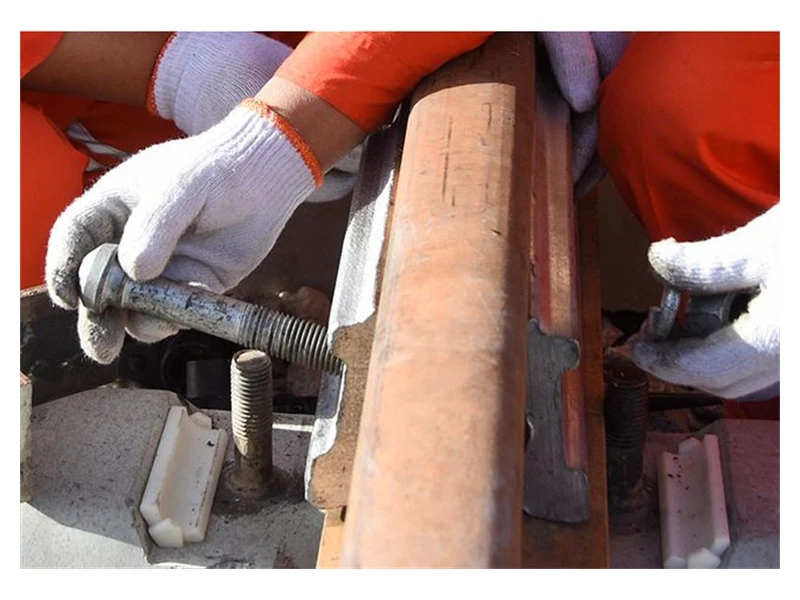
Bolt diameter and length are consequences of the joint bar and the rail section. The bar fixes the hole diameter and the distance between holes; the rail head and web fix the space available for the nut and washer. A buyer who names only a bolt size has described the last step in the chain.
The practical sequence is:
- rail section and its standard, such as 43, 50, 60 or 75 kg/m, UIC54 or UIC60, or an AREMA section;
- joint bar drawing or designation, including the number of holes;
- hole diameter and the hole pattern along the bar;
- bolt diameter and length that match those holes;
- nut, washer and locking arrangement;
- property class and surface finish.
Send the bar drawing if you have it. If you do not, send the rail section, the hole count and a measured hole diameter and pitch from the installed joint. A photograph helps, but it cannot replace the measurements.
Do not copy a torque value from a supplier page into the order. Published figures for fish bolt joints vary with bolt class, joint condition, lubrication and the standard being followed. The figure that governs is the one in the project specification or the approved installation procedure. Where no figure is given, ask for one to be confirmed rather than choosing a number that looks familiar.
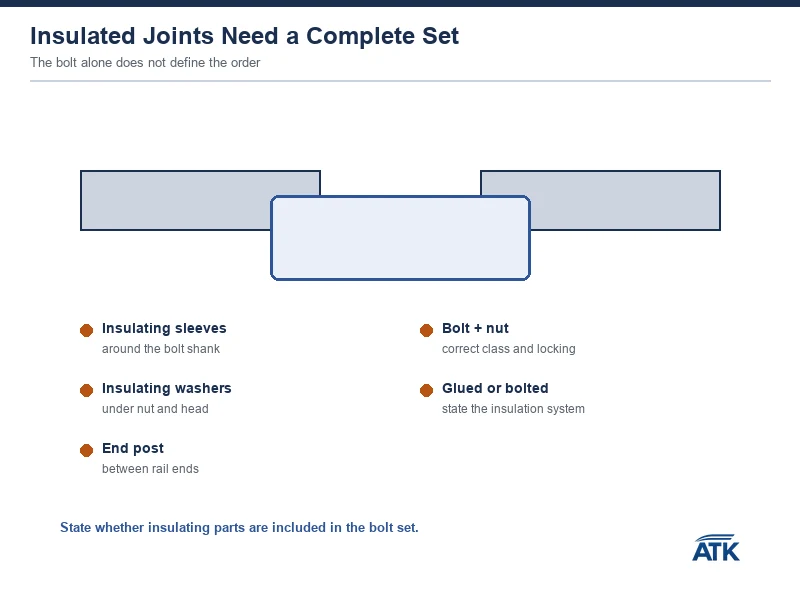
An insulated rail joint adds parts that a plain joint does not have: insulating sleeves, end posts, insulated washers and a different tightening control. The bolt itself may look similar, but the assembly is not interchangeable with a standard fishplate joint.
This is the reason TB/T 2347-1993 names insulated rail joint bolts and nuts specifically. It also explains the GSC-level demand for "insulated rail joint lockbolts": buyers are looking for a complete fastening set that preserves electrical isolation, not just a stronger bolt.
On an order for an insulated joint, state the rail section, the insulation system, whether the joint is glued or bolted, and the insulating components to be supplied. Confirm whether the insulating parts are included in the bolt set or ordered separately. A quotation that prices only steel fasteners for an insulated joint is incomplete.
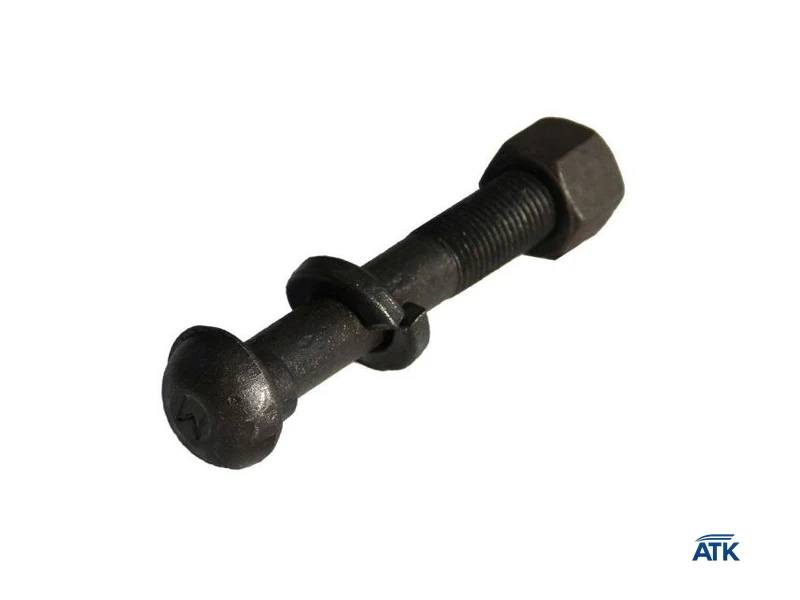
Supplier tables often put Chinese, ISO and North American fasteners in one row with a single "equivalent" column. That column hides two different things.
Reference | What it is | What to keep in mind |
TB/T 2347-1993 | Chinese standard for high-strength rail joint bolts and nuts, 43 to 75 kg/m | Classes are marked 8.8S and 10.9S and belong to a rail joint bolt and nut set |
ISO 898-1 | General mechanical property classes for bolts and screws | 8.8 and 10.9 describe fastener properties, not a rail joint assembly |
AREMA MRE | Recommended practice and approved joint plans for North American track | Joint detail follows the rail section and the approved plan |
The strength values behind 8.8S and ISO 8.8 line up for larger diameters. The reason to keep the marking separate is not a different strength scale; it is that the S-marked fastener comes with a rail joint bolt and nut specification that a generic ISO fastener does not carry.
Treat the drawing reference as the authority. If a buyer wants a cross-system substitution, have the project engineer approve it and record that approval. Do not assume equivalence in a quotation because the digits match.
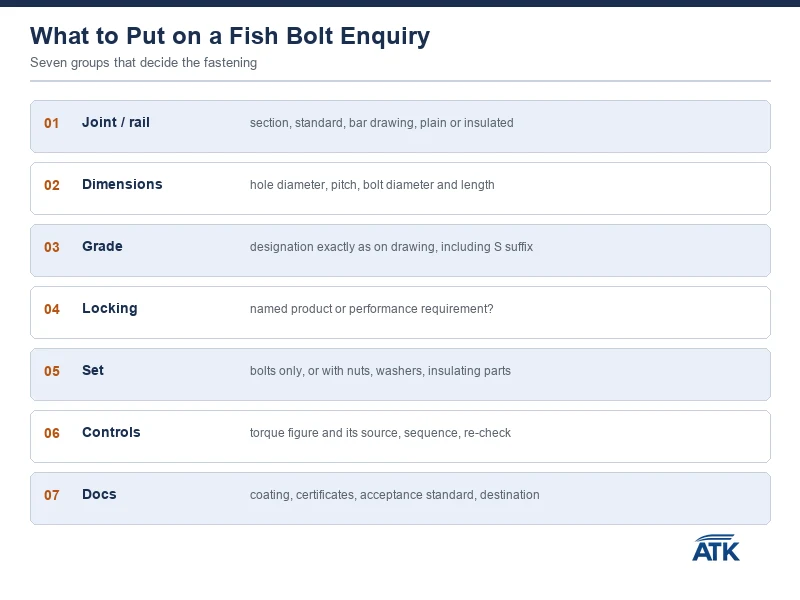
Copy this list into a request for quotation and fill what you know. Mark unknowns as "to be confirmed" instead of filling a guessed value.
Joint and rail. Rail section and standard with edition, joint bar designation or drawing number, number of holes, and whether the joint is plain or insulated. If the joint is insulated, state the insulation system and whether it is glued or bolted.
Dimensions. Hole diameter, hole pitch, bolt diameter and length, and the nut and washer arrangement. If a bracketed dimension appears on the drawing, state which value applies.
Grade and locking. The property class exactly as written on the drawing, including any S suffix. State the locking method called for, and whether lockbolts are a named product or a performance requirement.
Set contents. Whether the quote should include bolts only, or bolts with nuts, washers and insulating parts as a complete joint set. State quantities per joint and total joints.
Installation controls. The specified tightening figure and its source, the tightening sequence, and any re-check requirement. If no figure is named, ask the supplier to state what basis they are quoting against.
Documents and finish. Surface finish or coating, inspection certificate requirements, heat or melt certificate if needed, marking, and the acceptance standard named in the tender.
Logistics. Destination country, packaging, HS code requirements if exporting, and whether the order can be combined with fishplates or other track materials in one shipment.
Not exactly. Fish bolt refers to the fastener in a rail joint bar. Track bolt is a broader term that can include anchor bolts and clip fasteners. Name the joint for a clear quote.
The strength values correspond for larger diameters, but the marking and product context differ. 8.8S is a rail joint bolt class under TB/T 2347-1993 with an associated nut set; 8.8 is a general ISO property class. Keep the designation from the drawing.
It is part of the rail joint bolt marking under TB/T 2347-1993. The standard table uses it without a definition, so do not expand it into an English phrase or drop it from an order.
Older revisions used numbered grades. The current edition describes heat-treated track bolts instead. Name the edition when citing it so both parties read the same document.
In the technical sense it is a two-part fastener with a grooved pin and a swaged metal collar. A tool tightens it, rather than a nut being turned to a torque figure. The term is also used loosely for ordinary bolts with locking nuts. Confirm which the drawing means before quoting.
No. Rail section fixes the bar, but bolt diameter, length and hole geometry come from the joint bar drawing. Send the drawing or measured hole data.
The bolt may look similar, but the assembly includes insulating sleeves, washers and end posts, and the tightening control differs. State that the joint is insulated.
It comes from the project specification or approved installation procedure, not from a generic supplier table. If no figure is named, ask for one to be confirmed.
Treat them as different applications. Crane runways and mainline track use different joint details, sections and acceptance rules.
Usually yes for an insulated joint, because the insulating parts affect the bolt order. For a plain joint, state clearly whether nuts and washers are included.
Send the joint bar drawing, rail section and grade designation together, and a fish bolt can be matched to the joint instead of guessed from a catalogue row. The railway track bolts and fish bolts list on our track bolts page shows the joint bolt forms we supply, and the railway fishplates page shows the bars they mate with. To start a quotation, use the contact us form and attach the joint details above.
We have recommended some of our Related products to you. I hope you will be interested.
 English
 Русский